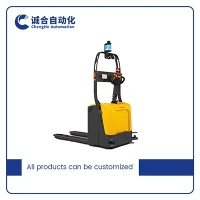
As a provider of Special AGVs, I often encounter a crucial question from clients: "What is the maximum load capacity of Special AGVs?" This question is not just about numbers; it delves into the core capabilities of our AGVs and their suitability for various industrial applications. To fully understand this, we need to explore the technology, design, and practical limitations of Special AGVs.
Understanding Special AGVs
Special AGVs, or Automated Guided Vehicles, are specialized material - handling vehicles that operate without an onboard operator. They are guided by a variety of methods, including magnetic tape, laser guidance, or vision - based systems. These AGVs are designed to meet specific industrial needs, such as transporting heavy loads in a factory, handling hazardous materials, or operating in confined spaces.
The load - carrying capacity of an AGV is one of its most important performance indicators. It determines the types of tasks an AGV can perform and the amount of material it can transport in a single trip. The maximum load capacity of Special AGVs can vary significantly depending on several factors.
Factors Affecting Load Capacity
1. Design and Structure
The physical design of an AGV plays a primary role in determining its load - carrying capacity. The frame, wheels, and suspension are all engineered to bear a certain amount of weight. For example, AGVs with a broader base and more robust frames are generally capable of handling heavier loads. Our company's Multi - layer Bin Robot is designed with a heavy - duty frame and a wide wheelbase, which allows it to carry multiple layers of bins with a relatively high total weight.
2. Power Source
The power source of an AGV is another key factor. Electric AGVs, which are the most common type, require sufficient battery power to move the vehicle and its load. A stronger battery can provide more torque to the motors, enabling the AGV to carry heavier loads. In some cases, we may use high - capacity batteries or multiple batteries to increase the power output and, consequently, the load capacity.
3. Drive System
The drive system of an AGV is responsible for transmitting power from the motor to the wheels. A more powerful drive system, such as a multi - motor drive, can distribute the load more effectively and provide better traction. This allows the AGV to carry heavier loads without losing stability or maneuverability. Our Customized Heavy Duty Explosion - Proof Automatic Transfer Cart is equipped with a high - performance drive system that enables it to transport heavy and bulky items even in challenging environments.
4. Safety Considerations
Safety is non - negotiable when it comes to AGV operations. AGVs must be designed to operate safely under all load conditions. This means that the maximum load capacity is also restricted by safety standards. For instance, the braking system must be able to stop the AGV within a safe distance, even when carrying the maximum load. The stability of the AGV must also be maintained to prevent tipping over during acceleration, deceleration, or turning.
Maximum Load Capacities in Different Applications
1. Light - Duty Applications
In light - duty applications, such as in electronics manufacturing or small - parts assembly, AGVs typically have a load capacity ranging from a few kilograms to a couple of hundred kilograms. These AGVs are designed to be highly maneuverable and can operate in relatively small spaces. They are often used for transporting small components, tools, or finished products.
2. Medium - Duty Applications
Medium - duty AGVs are commonly used in industries such as automotive, food and beverage, and pharmaceuticals. They can handle loads ranging from a few hundred kilograms to several tons. These AGVs are more robust and are often used for transporting semi - finished products, large containers, or pallets.
3. Heavy - Duty Applications
For heavy - duty applications, such as in steel mills, shipyards, or large - scale manufacturing plants, AGVs can have an extremely high load capacity. Some of our Customized Explosion - proof Heavy - duty Automated Guided Cart models are designed to carry loads of up to 100 tons or more. These AGVs are built with reinforced structures and high - power drive systems to handle the immense weight.
Real - World Case Studies
To illustrate the importance of load capacity in different applications, let's look at a few real - world examples.
In an automotive manufacturing plant, Special AGVs with a medium - duty load capacity are used to transport engines, transmissions, and other large components between different assembly stations. These AGVs need to be able to operate smoothly and accurately, ensuring that the production line runs efficiently. The load capacity of these AGVs is carefully designed to match the weight of the components they are expected to carry.
In a steel mill, heavy - duty AGVs are used to transport large steel coils. These coils can weigh several tons each. The AGVs in this environment must be able to withstand high temperatures, dusty conditions, and heavy loads. Our heavy - duty AGVs are specially designed to operate in such harsh environments, with a load capacity that can easily handle the weight of the steel coils.


Determining the Right Load Capacity for Your Needs
When choosing a Special AGV, it is essential to determine the appropriate load capacity for your specific application. Here are some steps to guide you:
- Assess Your Material Handling Needs
- Identify the types of materials you need to transport and their weights. Consider the average weight and the maximum weight of the loads.
- Evaluate the Operational Environment
- Take into account the layout of your facility, including aisle widths, turning radii, and floor conditions. These factors can affect the size and maneuverability of the AGV, which in turn can influence the load capacity.
- Consider Future Growth
- Anticipate any future changes in your production volume or material handling requirements. It may be wise to choose an AGV with a slightly higher load capacity to accommodate future growth.
Conclusion
The maximum load capacity of Special AGVs is a complex topic that depends on multiple factors, including design, power source, drive system, and safety considerations. As a Special AGV provider, we are committed to offering a wide range of AGV solutions with different load capacities to meet the diverse needs of our clients. Whether you are in a light - duty, medium - duty, or heavy - duty application, we have the expertise and technology to provide you with the right AGV.
If you are interested in learning more about our Special AGVs or need help in selecting the appropriate load capacity for your application, we encourage you to contact us for a detailed consultation. Our team of experts is ready to assist you in finding the best AGV solution for your business.
References
- "Automated Guided Vehicle Systems" by T. Al - Kheder and M. El - Maraghy
- "Industrial Mobile Robots: Technology, Implementation and Management" by R. Bostelman, M. Albus, and R. Messina