


Testing a newly customized Automated Guided Vehicle (AGV) is a crucial step in ensuring its performance, reliability, and safety. As a customized AGV supplier, we understand the importance of a comprehensive testing process to meet our clients' specific needs and industry standards. In this blog post, we will discuss the key steps and considerations for testing a newly customized AGV.
Pre - testing Preparations
Before initiating the actual testing, several preparatory steps are necessary. First, we need to thoroughly review the design specifications and requirements provided by the client. This includes understanding the AGV's intended application, such as material handling in a warehouse, assembly line transportation, or hazardous environment operations.
We also assemble a team of experts, including mechanical engineers, electrical engineers, and software developers. Each member brings their unique expertise to the testing process. The mechanical engineer focuses on the physical structure and movement mechanisms of the AGV, while the electrical engineer checks the power supply, sensors, and control circuits. The software developer is responsible for validating the programming logic and navigation algorithms.
In addition, we prepare the testing environment. This involves creating a mock - up of the actual working area, including the layout of the floor, obstacles, and charging stations. The testing environment should closely mimic the real - world conditions to ensure accurate testing results.
Physical Inspection
The first phase of testing is a physical inspection of the AGV. We start by examining the overall build quality. Check for any signs of damage, loose parts, or improper assembly during the manufacturing process. The frame should be sturdy and free from cracks or deformations.
Inspect the wheels and the drive system. The wheels should be properly aligned and have sufficient traction. The drive motors should operate smoothly and without any abnormal noises. We also check the braking system to ensure it can stop the AGV safely and within the specified stopping distance.
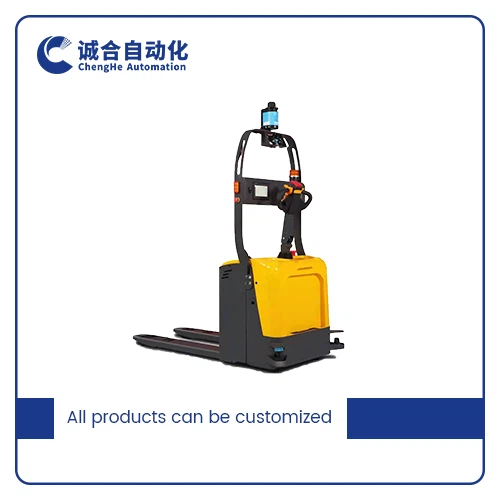
For AGVs with lifting or carrying mechanisms, such as the Customized Automatic Guided Pallet Truck, we test the lifting capacity and stability. The forks or other lifting devices should be able to lift the designated load without tilting or shaking.
Electrical System Testing
The electrical system of an AGV is complex and critical for its operation. We begin by checking the power supply. The battery or other power sources should be fully charged and provide a stable voltage throughout the testing process. Measure the voltage and current at different points in the electrical circuit to ensure compliance with the design requirements.

Next, we test the sensors. AGVs rely on various sensors, such as laser scanners, cameras, and proximity sensors, for navigation and obstacle detection. We verify the accuracy and reliability of these sensors. For example, the laser scanner should be able to detect obstacles within the specified range and angle, and the camera should provide clear and accurate images for visual navigation.
Inspect the control circuits and wiring. Check for any loose connections, short circuits, or damaged wires. The control board should be able to receive and process commands correctly and send appropriate signals to the drive motors, sensors, and other components.
Software and Navigation Testing
Software plays a vital role in the operation of an AGV. We start by testing the basic functions of the software, such as start - up, shutdown, and emergency stop commands. The AGV should respond to these commands immediately and safely.
Then, we focus on the navigation algorithms. The AGV should be able to follow the pre - programmed path accurately. This involves testing different types of paths, including straight lines, curves, and intersections. Check for any deviations from the path or unexpected behaviors during navigation.
For AGVs with the ability to operate in dynamic environments, such as warehouses with moving personnel and other vehicles, we simulate real - world scenarios. The AGV should be able to detect and avoid moving obstacles, adjust its path in real - time, and communicate effectively with other equipment in the system.
The Multi - layer Bin Robot requires more complex navigation and stacking operations. We test its ability to accurately pick up and stack bins at different heights and positions, ensuring the stability of the stacked bins and the efficiency of the operation.
Safety Testing
Safety is of utmost importance when it comes to AGVs. We conduct a series of safety tests to ensure the AGV operates safely in various situations. First, we test the emergency stop function. The AGV should stop immediately when the emergency stop button is pressed, regardless of its current state of operation.
We also test the obstacle detection and avoidance systems. Place obstacles in the path of the AGV and observe its response. The AGV should be able to detect the obstacles in time, stop or change its path to avoid collisions.
For AGVs used in hazardous environments, such as those handling flammable or explosive materials, we test the explosion - proof features. The Customized Explosion - proof Automated Guided Cart should meet all the relevant safety standards and regulations. This includes testing the enclosure integrity, electrical isolation, and the performance of the explosion - proof sensors and components.
Performance Testing
Performance testing measures the AGV's ability to meet the operational requirements. We test the speed, acceleration, and deceleration of the AGV. The AGV should be able to reach the specified maximum speed and accelerate and decelerate smoothly within the defined time limits.
Another important aspect of performance testing is the load - carrying capacity. Test the AGV with different loads to ensure it can operate normally under full - load conditions. Check for any signs of overheating, excessive wear, or reduced performance due to the load.
We also measure the energy consumption of the AGV. Efficient energy usage is crucial for reducing operating costs and increasing the AGV's runtime. Monitor the battery level during the testing process and calculate the energy consumption per unit of work.
Post - testing Evaluation and Reporting
After completing all the tests, we conduct a comprehensive evaluation of the AGV's performance. Compare the test results with the design specifications and client requirements. Identify any areas that need improvement, such as mechanical adjustments, software updates, or sensor calibration.
Prepare a detailed test report. The report should include a summary of the testing process, the test results, and any recommendations for improvement. Provide clear and concise data and analysis to help the client understand the AGV's performance and make informed decisions.
Conclusion
Testing a newly customized AGV is a multi - faceted process that requires careful planning, expertise, and attention to detail. By following the steps outlined in this blog post, we can ensure that the AGV meets the highest standards of performance, reliability, and safety. If you are interested in our customized AGV solutions and want to know more about our testing process or have specific requirements for your project, we invite you to contact us for further procurement discussions.
References
- IFR (International Federation of Robotics). Guidelines for AGV Testing and Validation.
- ISO standards related to Automated Guided Vehicles, such as ISO 3691 - 4.
- Industry whitepapers on AGV technology and testing best practices.


