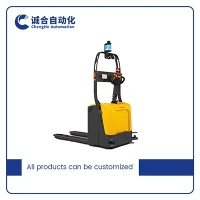
As a provider of AGV (Automated Guided Vehicle) Multi Vehicle Linkage systems, assessing the performance of these complex systems is not just a technical necessity but also a critical factor in ensuring we offer the best solutions to our clients. In this blog, I will share our insights on how to evaluate the performance of an AGV Multi Vehicle Linkage system.
System Design and Functionality
The foundation of a high - performing AGV Multi Vehicle Linkage system lies in its design and functionality. First, we need to evaluate whether the system architecture can support the intended application scenarios. For example, in a large - scale warehouse with high - density storage racks, the system should be able to efficiently manage multiple AGVs to carry out tasks such as goods storage and retrieval.
The flexibility of the system design is also crucial. A good AGV Multi Vehicle Linkage system should allow for easy reconfiguration of the task flow and route planning. This means that as the business needs change, for example, when there is a change in the warehouse layout or an increase in the order volume, the system can adapt without significant re - engineering.
Moreover, the compatibility of the system with other warehouse equipment is essential. Our AGV Multi Vehicle Linkage system should be able to work seamlessly with conveyor belts, stacker cranes, and other handling equipment. For instance, Customized Heavy duty Automated Guided Cart is designed to be highly compatible with various industrial setups, which is an important aspect of system performance evaluation.
Navigation Accuracy and Stability
One of the key performance indicators of an AGV Multi Vehicle Linkage system is navigation accuracy. AGVs need to move along the predefined paths precisely to ensure the safe and efficient operation of the entire system. We measure navigation accuracy by the deviation of the AGV's actual path from the planned path. A high - quality system should have a very low deviation rate, usually within a few millimeters.
The stability of navigation is also closely related to accuracy. An AGV that frequently loses its way or experiences sudden deviations during operation will disrupt the overall task flow. Factors such as sensor quality, map updating mechanisms, and environmental interference can affect navigation stability. For example, in a dynamic warehouse environment with moving obstacles, the system should be able to quickly and accurately adjust the AGV's path to avoid collisions. Our Multi - layer Bin Robot utilizes advanced sensors and algorithms to ensure high - precision and stable navigation in complex environments.
Task Execution Efficiency
The efficiency of task execution directly reflects the performance of the AGV Multi Vehicle Linkage system. We can evaluate this from several aspects. Firstly, the cycle time of each task is an important metric. This includes the time from when an AGV receives a task to when it completes the task, including moving to the target location, picking or placing goods, and returning to the standby position. A shorter cycle time means higher efficiency.
Secondly, the throughput of the system is another key indicator. Throughput refers to the number of tasks that the AGV Multi Vehicle Linkage system can complete within a certain period. For a large - scale logistics center, a high - throughput system can handle a large number of orders, which is vital for meeting market demand. To improve task execution efficiency, we optimize the task scheduling algorithm in our system. This algorithm takes into account factors such as AGV availability, task priority, and path congestion to allocate tasks in the most efficient way. Our Composite Mobile Robot is designed to achieve high - efficiency task execution through advanced algorithms and intelligent scheduling.
Safety and Reliability
Safety is a top priority in any industrial system, and the AGV Multi Vehicle Linkage system is no exception. We evaluate safety performance by looking at the safety features of the AGVs and the overall system. For example, AGVs should be equipped with collision - avoidance sensors. These sensors can detect obstacles in front of the AGV and automatically stop or change the path to prevent collisions.
Reliability is also an important factor. The system should be able to operate continuously for a long time without frequent breakdowns. We measure reliability by the Mean Time Between Failures (MTBF) and Mean Time To Repair (MTTR). A high MTBF and a low MTTR indicate a reliable system. Regular maintenance and software updates are also necessary to ensure the long - term reliability of the system.


Energy Efficiency
Energy consumption is a significant consideration, especially for large - scale AGV Multi Vehicle Linkage systems. High energy consumption not only increases operating costs but also has a negative impact on the environment. We evaluate energy efficiency by analyzing the power consumption of individual AGVs and the overall system.
To improve energy efficiency, we can use energy - saving technologies such as regenerative braking. When an AGV decelerates, the regenerative braking system can convert the kinetic energy into electrical energy and store it, which can then be reused later. Additionally, optimizing the task scheduling to reduce unnecessary movements and idle time can also lead to lower energy consumption.
Scalability
As businesses grow, the AGV Multi Vehicle Linkage system should be able to scale up to meet the increasing demand. Scalability refers to the ability of the system to add more AGVs and handle more tasks without significant performance degradation.
We evaluate scalability by conducting simulation tests and on - site trials. During the simulation, we increase the number of AGVs and tasks in the system to see how the system's performance changes. In on - site trials, we gradually add new AGVs to the existing system and monitor key performance indicators such as task execution efficiency and navigation accuracy. A scalable system allows our clients to expand their operations smoothly without having to replace the entire system.
Data Analysis and Monitoring
In the era of Industry 4.0, data analysis and monitoring are essential for evaluating and improving the performance of the AGV Multi Vehicle Linkage system. We install sensors on AGVs and in the warehouse environment to collect various data, such as AGV speed, position, battery status, and task completion time.
By analyzing this data, we can identify bottlenecks in the system, predict potential failures, and optimize the task flow. For example, if the data shows that a certain area of the warehouse has a high traffic congestion rate, we can adjust the path planning algorithm to avoid this area. Real - time monitoring also allows us to respond quickly to any abnormal situations.
Conclusion
Evaluating the performance of an AGV Multi Vehicle Linkage system requires a comprehensive approach, covering aspects such as system design, navigation accuracy, task execution efficiency, safety, energy efficiency, scalability, and data analysis. As a professional AGV Multi Vehicle Linkage provider, we are committed to continuous improvement and innovation to ensure that our systems meet the highest performance standards.
If you are interested in our AGV Multi Vehicle Linkage systems or have any questions about evaluating system performance, we welcome you to contact us for purchasing consultations. We are dedicated to providing you with the best solutions to meet your specific needs.
References
- Some relevant industry white papers on AGV technology
- Research reports on automated guided vehicle systems performance evaluation