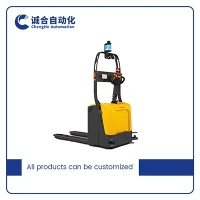
As a supplier of Composite AGVs, I often get asked about the return on investment (ROI) for these advanced automated guided vehicles. In this blog post, I'll delve into the various aspects that contribute to the ROI of a Composite AGV, providing you with a comprehensive understanding of why investing in these machines can be a game - changer for your business.


1. Initial Investment
The first step in calculating ROI is to understand the initial investment. A Composite AGV combines the features of different types of AGVs, offering a more versatile and efficient solution. The cost of a Composite AGV includes the price of the vehicle itself, installation, software integration, and any necessary training for your staff.
Compared to traditional AGVs, the initial cost of a Composite AGV might be higher. However, it's important to note that this higher upfront cost is offset by the long - term benefits it provides. For example, a Multi - layer Bin Robot is a type of Composite AGV that can handle multiple layers of bins, eliminating the need for multiple single - function AGVs. This not only saves on the purchase cost of additional vehicles but also reduces the floor space required for their operation.
2. Labor Cost Savings
One of the most significant factors contributing to the ROI of a Composite AGV is labor cost savings. In a traditional warehouse or manufacturing environment, manual material handling tasks are time - consuming and require a significant amount of human labor. Workers need to move materials from one location to another, which can be physically demanding and prone to errors.
With a Composite AGV, these tasks can be automated. The AGV can operate 24/7 without breaks, reducing the need for multiple shifts of workers. For instance, a Customized AGV Forklift can handle heavy loads and stack them in an organized manner. This eliminates the need for manual forklift operators, who not only require a salary but also benefits and training.
Over time, the savings in labor costs can be substantial. According to industry research, companies can save up to 50% on labor costs by implementing AGV systems. This is a direct contribution to the bottom line and a major factor in the positive ROI of a Composite AGV.
3. Increased Productivity
Composite AGVs are designed to work efficiently and quickly. They can move materials at a consistent speed, without the variability that comes with human operators. For example, a Customized Automatic Guided Pallet Truck can transport pallets from the receiving area to the storage area in a timely manner, reducing the time materials spend in transit.
In addition, Composite AGVs can be programmed to optimize their routes. They can avoid congestion and take the shortest path to their destination, further increasing the efficiency of material handling. This increased productivity means that more products can be processed in a shorter period, leading to higher output and potentially increased revenue.
Studies have shown that companies using AGV systems can increase their productivity by up to 30%. This increase in productivity directly impacts the ROI of the Composite AGV, as it allows the company to generate more revenue with the same or fewer resources.
4. Reduced Error Rates
Manual material handling is prone to errors, such as misplacing items, dropping loads, or incorrect inventory management. These errors can lead to additional costs, including lost products, rework, and customer dissatisfaction.
Composite AGVs, on the other hand, are highly accurate. They use advanced sensors and navigation systems to ensure that materials are moved and stored in the correct locations. For example, the Multi - layer Bin Robot can precisely place bins in the designated storage slots, reducing the risk of misplacement.
By reducing error rates, Composite AGVs save the company money on rework and lost products. They also improve customer satisfaction by ensuring that orders are fulfilled accurately and on time. This positive impact on the company's operations contributes to the overall ROI of the Composite AGV.
5. Flexibility and Scalability
Another advantage of Composite AGVs is their flexibility and scalability. As your business grows or changes, the AGV can be easily reprogrammed or reconfigured to meet new requirements. For example, if you need to change the layout of your warehouse, the AGV can be updated to follow new routes.
This flexibility means that you don't have to invest in new equipment every time your business needs change. You can simply modify the existing Composite AGV to adapt to the new environment. In addition, Composite AGVs can be easily integrated with other automation systems, such as conveyor belts and robotic arms, further enhancing their functionality.
The scalability of Composite AGVs also allows you to start small and gradually expand your automation system as your business grows. This reduces the initial investment risk and ensures that you can make the most of your investment over time.
6. Maintenance and Operating Costs
While the initial investment in a Composite AGV is relatively high, the maintenance and operating costs are relatively low. AGVs are designed to be durable and reliable, with fewer moving parts compared to traditional vehicles. This means that there are fewer components that can break down, reducing the frequency and cost of maintenance.
In addition, Composite AGVs are energy - efficient. They use electric power, which is generally cheaper than fuel - powered vehicles. The cost of electricity is also more stable than the price of fuel, providing predictability in operating costs.
Overall, the low maintenance and operating costs of Composite AGVs contribute to their positive ROI. The savings in these areas over the lifespan of the AGV can offset the initial investment and result in significant long - term savings.
7. Calculating the ROI
To calculate the ROI of a Composite AGV, you need to consider all the factors mentioned above. The formula for ROI is:
ROI = (Net Profit / Cost of Investment) x 100
The net profit is the total savings in labor costs, increased productivity, reduced error rates, and other benefits minus the initial investment and the maintenance and operating costs over a specific period.
For example, let's assume that the initial investment in a Composite AGV is $100,000. Over the first year of operation, the company saves $50,000 in labor costs, increases productivity by $30,000, and reduces error - related costs by $20,000. The maintenance and operating costs for the year are $10,000.
The net profit for the first year is ($50,000 + $30,000+ $20,000 - $10,000) = $90,000.
The ROI for the first year is ($90,000 / $100,000) x 100 = 90%
This is a simplified example, and the actual ROI will depend on various factors specific to your business. However, it demonstrates the potential for a high return on investment when using a Composite AGV.
Contact for Purchase and Negotiation
If you're interested in learning more about the ROI of our Composite AGVs or are considering purchasing one for your business, we'd love to have a conversation with you. Our team of experts can provide you with detailed information, conduct a customized ROI analysis for your specific situation, and discuss the best solutions to meet your needs. Don't hesitate to reach out to us to start the purchase negotiation process.
References
- Industry reports on AGV adoption and cost savings
- Research studies on the productivity and efficiency of AGV systems
- Case studies of companies using Composite AGVs