


As a supplier of customized Automated Guided Vehicles (AGVs), I've witnessed firsthand the diverse range of factors that can significantly impact the performance of these remarkable machines. AGVs are tailored to meet specific industry needs, and understanding the elements that affect their performance is crucial for both suppliers like us and our clients. In this blog, I'll delve into the key factors that can make or break the efficiency, reliability, and overall performance of customized AGVs.
1. Design and Customization
The design phase is the foundation of a high - performing customized AGV. Every aspect of the AGV, from its size and shape to its load - carrying capacity, must be carefully considered. When we work with clients, we start by thoroughly understanding their operational requirements. For example, if a client in a manufacturing plant needs to transport heavy machinery parts, we'll design an AGV with a robust frame and a high - capacity lifting mechanism.
Customization also extends to the AGV's navigation system. Different industries may require different navigation methods, such as laser guidance, magnetic tape guidance, or vision - based guidance. Laser - guided AGVs are known for their high precision and flexibility, making them suitable for complex warehouse layouts. On the other hand, magnetic tape - guided AGVs are more cost - effective and easier to install, which is ideal for smaller facilities with straightforward routes.
Our company offers a variety of specialized AGVs, such as the Explosion - proof Collaborative AGV. This AGV is designed for hazardous environments where safety is of utmost importance. Its explosion - proof features are carefully integrated into the design to ensure reliable operation without compromising on performance.
2. Battery and Power Management
The battery is the lifeblood of an AGV. The type of battery used, its capacity, and the charging system all play a vital role in the AGV's performance. Lithium - ion batteries are becoming increasingly popular due to their high energy density, long lifespan, and fast charging capabilities. They allow AGVs to operate for longer periods without frequent recharging, which is essential for continuous production processes.
Proper power management is also crucial. An efficient power management system can optimize the AGV's energy consumption, extending its battery life and reducing operating costs. For example, our AGVs are equipped with intelligent power management algorithms that adjust the power output based on the AGV's workload. When the AGV is idle or moving at a low speed, it consumes less power, conserving energy for when it needs to perform heavy - duty tasks.
3. Software and Control Systems
The software and control systems are the brains of the AGV. They are responsible for navigation, task management, and communication with other devices in the facility. A well - developed software system can enhance the AGV's performance by improving its accuracy, speed, and responsiveness.

Our customized AGVs are powered by advanced software that can handle complex tasks. The control system can manage multiple AGVs simultaneously, ensuring smooth traffic flow and efficient operation. For example, in a large distribution center, the software can assign tasks to different AGVs based on their location and availability, minimizing the time spent on idle movements.
The software also allows for easy integration with other systems, such as Warehouse Management Systems (WMS) and Manufacturing Execution Systems (MES). This integration enables real - time data exchange, which is essential for optimizing the overall supply chain process.
4. Load and Payload Handling
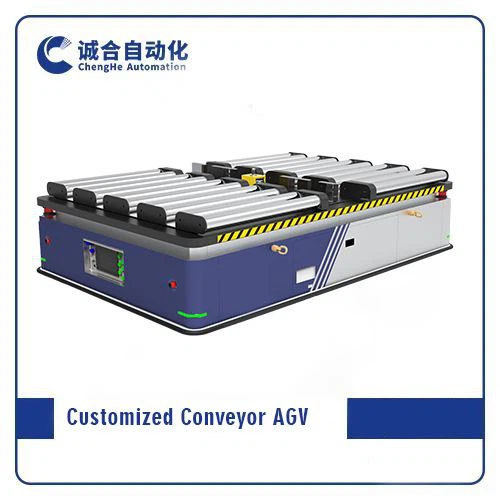
The ability to handle different types of loads is a critical factor in the performance of an AGV. The AGV's payload capacity, load - handling mechanism, and stability all need to be carefully considered. For example, a Customized Conveyor AGV is designed to transport goods on a conveyor system. Its roller mechanism must be able to handle the weight and size of the products being transported without causing any damage.
The AGV's stability is also important, especially when carrying heavy or unevenly distributed loads. Our engineers use advanced simulation tools to ensure that the AGV's design provides maximum stability under various load conditions. This helps to prevent accidents and ensure the safe transportation of goods.
5. Environmental Conditions
The environment in which the AGV operates can have a significant impact on its performance. Factors such as temperature, humidity, dust, and vibration can all affect the AGV's components and systems. For example, in a cold storage facility, the AGV's battery performance may be reduced due to the low temperature. To address this issue, we can design AGVs with specialized battery heating systems to maintain optimal battery performance.
In dusty environments, the AGV's sensors and electronics may be prone to damage. We use dust - resistant materials and protective enclosures to ensure the reliability of the AGV's components. Additionally, in areas with high levels of vibration, such as near heavy machinery, we design AGVs with shock - absorbing features to protect the internal components.
6. Maintenance and Support
Regular maintenance is essential for keeping the AGV in optimal condition. A well - maintained AGV is more likely to perform efficiently and have a longer lifespan. Our company provides comprehensive maintenance services, including regular inspections, component replacements, and software updates.
We also offer 24/7 technical support to our clients. Our team of experienced technicians can quickly diagnose and resolve any issues that may arise with the AGV. This ensures minimal downtime and maximum productivity for our clients.
7. Compatibility with Existing Infrastructure
When implementing a customized AGV, it's important to ensure that it is compatible with the existing infrastructure in the facility. This includes the layout of the warehouse or factory, the type of storage systems, and the communication protocols used. For example, if the facility already has a barcode - based inventory management system, the AGV should be able to integrate with it seamlessly.
Our Customized Extra - Long Automated Guided Cart is designed to be highly adaptable to different infrastructure setups. Its long - length design allows it to transport large or long - shaped items, and it can be easily integrated with existing conveyor systems and storage racks.
Conclusion
In conclusion, the performance of a customized AGV is influenced by a multitude of factors, including design and customization, battery and power management, software and control systems, load and payload handling, environmental conditions, maintenance and support, and compatibility with existing infrastructure. As a supplier, we are committed to providing our clients with AGVs that are tailored to their specific needs and offer the highest level of performance.
If you're interested in learning more about our customized AGVs or have specific requirements for your facility, we encourage you to contact us for a detailed consultation. Our team of experts will work closely with you to understand your needs and provide you with the best AGV solutions. Let's work together to improve the efficiency and productivity of your operations.
References
- "Automated Guided Vehicle Systems: Technology, Implementation, and Management" by David A. Guerriero
- "Industrial Automation: A Guide to AGV Technology" by John Smith
- Various industry reports and whitepapers on AGV technology and applications.


