


In the dynamic landscape of modern logistics and manufacturing, the efficiency and adaptability of Automated Guided Vehicles (AGVs) play a crucial role in optimizing operations. As a leading Composite AGV supplier, we understand the significance of flexibility in task allocation for these advanced machines. This blog post delves into the concept of flexibility in Composite AGV task allocation, exploring its various aspects, benefits, and real - world applications.
Understanding Flexibility in Composite AGV Task Allocation
Flexibility in task allocation for Composite AGVs refers to the ability of these vehicles to handle a diverse range of tasks, adapt to changing work environments, and reconfigure their operations in a timely manner. Unlike traditional AGVs that may be designed for a single, specific task, Composite AGVs are engineered to be multi - functional, capable of performing different types of operations such as material handling, transportation, and assembly.
One of the key elements of this flexibility is the modular design of Composite AGVs. These vehicles are often built with interchangeable components and accessories, allowing them to be easily modified based on the specific requirements of a task. For example, an AGV can be equipped with different types of lifting devices, such as forks, platens, or hoists, to handle various kinds of loads. Moreover, the software that controls the AGV can be reprogrammed to change its route, speed, and handling logic, enabling it to transition smoothly between different tasks.
Key Factors Contributing to Flexibility
1. Advanced Navigation Systems
Composite AGVs are typically equipped with state - of - the - art navigation systems, such as laser navigation, vision - based navigation, and inertial navigation. These systems provide high - precision positioning and enable the AGV to operate in complex and dynamic environments. For instance, in a warehouse with multiple narrow aisles and changing storage layouts, a laser - guided AGV can quickly adjust its path to avoid obstacles and reach its destination efficiently. This ability to navigate flexibly is essential for AGVs to handle different tasks in diverse settings.
2. Multi - Modal Functionality
Another factor that contributes to the flexibility of Composite AGVs is their multi - modal functionality. These vehicles can be configured to operate in different modes, such as autonomous mode, semi - autonomous mode, or manual mode. In autonomous mode, the AGV can carry out a pre - programmed task without human intervention. In semi - autonomous mode, a human operator can provide some guidance or make adjustments during the task execution. Manual mode allows the operator to take full control of the AGV, which can be useful in situations where precise maneuvering is required. This range of operating modes gives users the flexibility to choose the most appropriate mode based on the nature of the task and the on - site conditions.
3. Integration with Other Systems
Composite AGVs can be easily integrated with other systems in a production or logistics environment, such as Warehouse Management Systems (WMS), Manufacturing Execution Systems (MES), and robotic arms. This integration enables seamless data exchange and coordination between different components of the system. For example, when an AGV is integrated with a WMS, it can receive real - time information about inventory levels, storage locations, and order priorities. Based on this information, the AGV can optimize its task allocation and transportation routes, improving the overall efficiency of the warehouse.
Benefits of Flexibility in Task Allocation
1. Increased Productivity
Flexibility in task allocation allows Composite AGVs to handle a variety of tasks, reducing the need for multiple specialized vehicles. This means that a single AGV can perform different operations throughout the day, maximizing its utilization rate. For example, an AGV can transport raw materials to the production line in the morning and then move finished products to the warehouse in the afternoon. By eliminating the idle time between tasks, the overall productivity of the system is significantly improved.
2. Cost Savings
The flexibility of Composite AGVs also leads to cost savings. Since these vehicles can be adapted to different tasks, companies do not need to invest in a large number of specialized AGVs for each type of operation. Additionally, the ability to reconfigure the AGVs reduces the need for expensive hardware upgrades or replacements. Over time, these cost - saving measures can have a significant impact on the bottom line of a business.
3. Adaptability to Changing Demands
In today's fast - paced business environment, companies need to be able to adapt quickly to changing market demands. Composite AGVs with flexible task allocation can easily respond to these changes. For example, if a company decides to introduce a new product line, the AGVs can be reprogrammed and reconfigured to handle the new materials and production processes. This adaptability ensures that the company can maintain its competitiveness in the market.
Real - World Applications
1. E - commerce Warehouses
In e - commerce warehouses, where order volumes can vary significantly and the types of products are diverse, the flexibility of Composite AGVs is highly valuable. These AGVs can be used to pick and pack products, transport goods between different storage areas, and load and unload trucks. With their ability to adapt to different tasks and work environments, they can effectively handle the high - volume and complex logistics operations in e - commerce warehouses.
2. Automotive Manufacturing Plants
Automotive manufacturing plants require precise and efficient material handling. Composite AGVs can be used to transport various components, such as engines, transmissions, and body parts, between different assembly stations. Their flexibility in task allocation allows them to handle different sizes and weights of components and adapt to changes in the production schedule. For example, if there is a change in the production line layout, the AGVs can be quickly reprogrammed to adjust their routes and operations.
3. Hazardous Environments
In hazardous environments, such as chemical plants or mines, the use of Customized Explosion - proof Automated Guided Cart is essential. These specialized Composite AGVs are designed to operate safely in explosive atmospheres and can perform tasks such as material transfer and equipment maintenance. Their flexibility in task allocation enables them to handle different types of hazardous materials and adapt to the changing safety requirements in these environments.

4. Heavy - Duty Applications
For heavy - duty applications, Customized Heavy Duty Explosion - Proof Automatic Transfer Cart can be used. These AGVs are capable of handling large and heavy loads, such as steel coils or construction materials. Their flexibility allows them to be used in different industries, including construction, steel manufacturing, and shipbuilding.
The Concept of Dual AGV Linkage
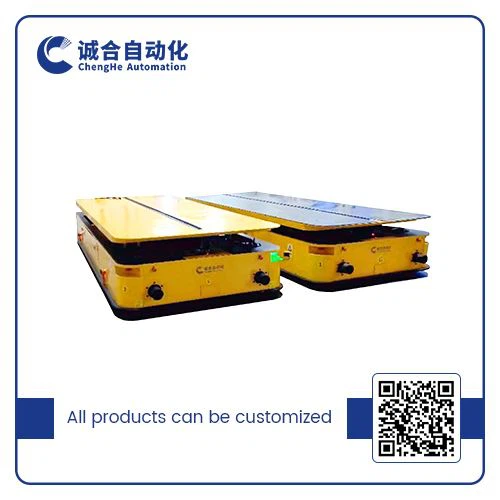
In some cases, the flexibility of Composite AGVs can be further enhanced through Dual AGV Linkage. This technology allows two AGVs to work together in a coordinated manner to handle extremely large or heavy loads that are beyond the capacity of a single AGV. The two AGVs can communicate with each other in real - time to synchronize their movements, ensuring stable and efficient transportation. Dual AGV Linkage is particularly useful in industries such as aerospace and heavy machinery manufacturing.
Encouraging Contact for Purchase and洽谈
As a trusted Composite AGV supplier, we are committed to providing high - quality, flexible, and reliable AGV solutions to meet the diverse needs of our customers. If you are looking for a way to improve the efficiency and flexibility of your material handling and logistics operations, our Composite AGVs are the ideal choice. Whether you need a standard AGV for general tasks or a customized solution for specific applications, our team of experts can work with you to design and implement the most suitable system.
We invite you to contact us to discuss your requirements and explore how our Composite AGVs can benefit your business. Our sales representatives are ready to provide you with detailed product information, technical support, and competitive pricing. Let us work together to create a more efficient and flexible future for your operations.
References
- "Automated Guided Vehicle Systems: Technology and Applications" by Peter R. Nof
- "Logistics Automation: Concepts, Technologies, and Applications" by Stefan Nickel, Lars Mönch, and Christian Salditt
- Industry reports on the development and trends of AGV technology from leading research institutions.


