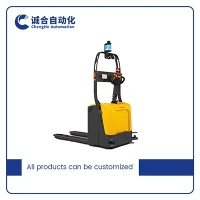
As a leading supplier of Composite AGVs, one of the most common questions we receive from our customers is about the battery life of our vehicles. The battery life of a Composite AGV is a crucial factor that affects its operational efficiency, productivity, and overall cost - effectiveness. In this blog post, we'll delve deep into the topic of how long the battery life of a Composite AGV can be and what factors influence it.
Understanding Composite AGVs
Before we discuss battery life, it's essential to understand what Composite AGVs are. Composite AGVs are Automated Guided Vehicles constructed with composite materials. These materials offer advantages such as high strength - to - weight ratio, corrosion resistance, and reduced noise during operation. They are designed for various industries including manufacturing, logistics, and warehousing, performing tasks like material handling, transporting goods, and assisting in assembly lines.
Factors Affecting the Battery Life of Composite AGVs
1. Battery Technology
The type of battery used in a Composite AGV plays a significant role in determining its battery life. The most common battery types for AGVs are lead - acid batteries, lithium - ion batteries, and nickel - metal hydride (NiMH) batteries.
Lead - acid batteries have been used in AGVs for a long time. They are relatively inexpensive but have a lower energy density compared to lithium - ion batteries. This means they need to be larger and heavier to store the same amount of energy. Their charge - discharge cycles are limited, typically around 300 - 500 cycles, which can affect the long - term battery life.
Lithium - ion batteries, on the other hand, offer a higher energy density. They can store more energy in a smaller and lighter package. Lithium - ion batteries also have a longer lifespan, with up to 1500 - 2000 charge - discharge cycles. They allow for faster charging times, which can significantly reduce downtime for AGVs. For our Composite AGVs, we often recommend lithium - ion batteries for their superior performance and long - term cost - effectiveness.
NiMH batteries fall in between lead - acid and lithium - ion batteries in terms of energy density and cost. They have a decent number of charge - discharge cycles, around 500 - 1000 cycles, and are a good option for applications where cost is a concern but some level of performance is still required.


2. Operational Conditions
The environment in which a Composite AGV operates can have a substantial impact on its battery life. Temperature is a critical factor. Batteries perform optimally within a specific temperature range. High temperatures can accelerate the chemical reactions inside the battery, leading to faster degradation. On the other hand, low temperatures can reduce the battery's capacity and make it more difficult for the battery to deliver power.
The load that the AGV is carrying also affects the battery life. If the AGV is constantly carrying heavy loads, the motor will consume more power, causing the battery to drain faster. Additionally, the frequency of starts and stops can impact the battery. Frequent acceleration and deceleration require more energy, which shortens the battery life.
3. Charging Habits
Proper charging is essential for maintaining the battery life of a Composite AGV. Overcharging or undercharging can damage the battery cells and reduce the overall lifespan of the battery. It's important to follow the manufacturer's guidelines on charging procedures. For example, lithium - ion batteries should not be fully discharged before charging, as this can cause irreversible damage to the battery cells.
We recommend implementing a regular charging schedule for the AGVs. For continuous operation scenarios, opportunity charging can be a great solution. Opportunity charging involves charging the battery for short periods throughout the day during breaks in operation. This helps to keep the battery level relatively high and reduces the need for deep discharges.
Expected Battery Life
Typically, with proper maintenance and under normal operating conditions, a Composite AGV equipped with a lithium - ion battery can have a battery life of around 3 - 5 years. This translates to approximately 1500 - 2000 charge - discharge cycles.
If an AGV is used for 8 - 10 hours a day, 5 days a week, the battery should be able to support continuous operation for a significant portion of the workday. For example, an AGV with a fully charged lithium - ion battery can operate for 4 - 6 hours depending on the load and the type of tasks it is performing.
However, if the AGV is used in a more demanding environment, such as a high - temperature warehouse or is constantly carrying heavy loads, the battery life may be reduced to 2 - 3 years.
Extending the Battery Life of Composite AGVs
1. Regular Maintenance
Performing regular maintenance checks on the battery is crucial. This includes inspecting the battery for any signs of damage, such as cracks or leaks. Cleaning the battery terminals to prevent corrosion can also improve the battery's performance and lifespan.
2. Optimizing Operations
Operators can optimize the AGV's route and task assignment to reduce unnecessary starts and stops. Using advanced guidance systems can help the AGV move more efficiently, thereby reducing power consumption.
3. Advanced Charging Systems
Investing in advanced charging systems, such as smart chargers, can ensure that the battery is charged properly. Smart chargers can adjust the charging current and voltage based on the battery's state of charge, protecting the battery from overcharging and undercharging.
Applications and Battery Life
In different applications, the battery life requirements of Composite AGVs vary. For example, in an automated warehouse for e - commerce, where the AGVs are constantly moving goods from storage to picking areas, having a long - lasting battery is essential. The AGVs need to operate continuously for extended periods to keep up with the high - volume order fulfillment process.
In a manufacturing plant, the AGVs may be used for transporting raw materials and finished products between different production lines. These AGVs may operate in a more controlled environment, but they still need to have a reliable battery to ensure smooth production.
Our company offers a range of Composite AGVs suitable for various applications. You can learn more about our Explosion - proof Collaborative AGV, Dual AGV Linkage, and AGV Multi - Vehicle Coordination solutions on our website.
Contact Us for Purchase and Consultation
If you are interested in our Composite AGVs and want to know more about their battery life, performance, or other features, we encourage you to contact us. We have a team of experts who can provide you with detailed information and help you choose the most suitable AGV for your specific needs. Whether you are looking to improve your warehouse logistics or enhance your manufacturing process, our Composite AGVs can offer a reliable and cost - effective solution. Start a conversation with us today and take your operations to the next level!
References
- Smith, J. (2020). "Battery Technologies for Automated Guided Vehicles". Journal of Industrial Automation, 15(2), 45 - 56.
- Johnson, A. (2019). "Optimizing the Battery Life of AGVs in Warehouse Operations". Logistics Management Review, 22(3), 78 - 89.
- Brown, C. (2021). "Composite Materials in Automated Guided Vehicles: Performance and Applications". Advanced Manufacturing Journal, 18(4), 101 - 112.