


Hey there! As a supplier of collaborative robots, I often get asked about how these nifty machines handle work - piece identification. It's a super important topic, especially when you're looking to streamline your production processes and boost efficiency. So, let's dive right in and explore this together.

First off, what exactly are collaborative robots? Well, they're designed to work side - by - side with human workers. Unlike traditional industrial robots that are often cordoned off in safety cages, collaborative robots are built with safety features that allow them to operate in close proximity to humans. This makes them ideal for a wide range of applications, from small - scale manufacturing to large - scale assembly lines.
Now, onto work - piece identification. There are several ways collaborative robots can identify work - pieces, and I'll break them down for you.
Vision Systems
One of the most common methods is using vision systems. These are like the robot's eyes. Vision systems can be made up of cameras, lenses, and image - processing software. The camera captures an image of the work - piece, and the software analyzes it to figure out what it is, where it's located, and its orientation.
For example, in a pick - and - place application, the collaborative robot needs to know exactly where the work - piece is on a conveyor belt so it can pick it up accurately. The vision system can detect the shape, size, and color of the work - piece and provide the robot with the necessary coordinates. This way, the robot can quickly and precisely grab the right item.
There are different types of vision systems available. 2D vision systems are great for applications where you only need to know the position and orientation of a flat work - piece. They're relatively simple and cost - effective. On the other hand, 3D vision systems are more advanced. They can provide depth information, which is crucial for handling complex - shaped work - pieces or when you need to pick items from a pile.
Sensors
Another way collaborative robots can identify work - pieces is through sensors. There are various types of sensors that can be used, such as proximity sensors, force sensors, and tactile sensors.
Proximity sensors can detect when a work - piece is near the robot. They work based on different principles, like infrared or ultrasonic waves. For instance, if a work - piece is approaching the robot's gripper, the proximity sensor can trigger the gripper to open or close at the right time.
Force sensors are used to measure the force applied by the robot when it interacts with the work - piece. This is important for tasks like assembly, where the robot needs to apply the right amount of force to avoid damaging the work - piece. If the force sensor detects that the force is too high or too low, the robot can adjust its actions accordingly.
Tactile sensors are like the robot's sense of touch. They can provide information about the surface texture, shape, and hardness of the work - piece. This is useful for tasks like inspecting the quality of a work - piece or when the robot needs to handle delicate items.
RFID and Barcode Systems
Radio - Frequency Identification (RFID) and barcode systems are also popular for work - piece identification. These systems use tags or labels that are attached to the work - pieces.
RFID tags contain a unique identifier that can be read wirelessly by an RFID reader. The reader sends the information to the robot's control system, which then knows what the work - piece is and can assign the appropriate task. RFID tags are great because they can be read from a distance and don't require a direct line of sight.
Barcode systems are similar, but they use barcodes that are printed on labels. The robot uses a barcode scanner to read the barcode and get information about the work - piece. Barcode systems are simple and cost - effective, but they do require the scanner to have a clear view of the barcode.
Integration with Other Equipment
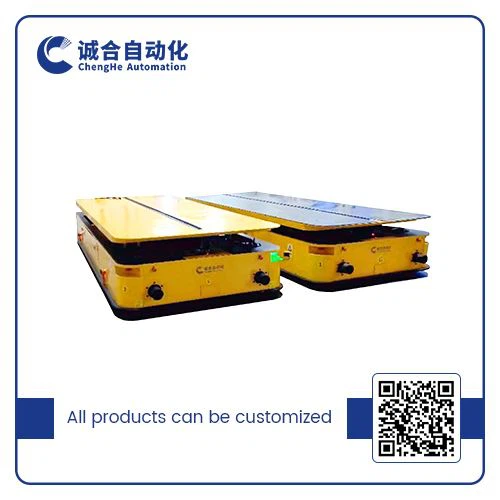
Collaborative robots don't work in isolation. They can be integrated with other equipment in the production line, such as Dual AGV Linkage and Customized Automatic Guided Pallet Truck. When it comes to work - piece identification, this integration can be very beneficial.
For example, if a Dual AGV Linkage is used to transport work - pieces to the collaborative robot, the AGV can be equipped with its own identification system. It can scan the work - pieces and send the information to the robot, so the robot knows exactly what to expect when the work - piece arrives.
Similarly, a Customized Automatic Guided Pallet Truck can be used to move pallets of work - pieces around the factory. If the pallet truck has an identification system, it can communicate with the collaborative robot about the contents of the pallets, making the whole process more efficient.
Explosion - proof Collaborative AGV
In some industries, like the chemical or oil and gas industry, there's a risk of explosion. That's where Explosion - proof Collaborative AGV comes in. These AGVs are designed to operate safely in hazardous environments.
When it comes to work - piece identification, explosion - proof collaborative AGVs can use the same methods as regular collaborative robots, such as vision systems and sensors. However, they need to be designed with special safety features to prevent sparks or other ignition sources.
Benefits of Accurate Work - piece Identification
Accurate work - piece identification offers several benefits. Firstly, it improves the efficiency of the production process. When the robot knows exactly what it's dealing with, it can perform tasks more quickly and accurately. This reduces the time spent on trial - and - error and minimizes the chances of errors.
Secondly, it enhances the quality of the products. By accurately identifying the work - pieces, the robot can ensure that the right operations are performed on each item. This helps to maintain consistent quality standards.
Finally, it increases the safety of the workplace. When the robot can identify the work - pieces correctly, it can interact with them in a safe and controlled manner. This reduces the risk of accidents and injuries.
Conclusion
So, there you have it! That's how collaborative robots handle work - piece identification. Whether it's through vision systems, sensors, RFID and barcode systems, or integration with other equipment, these robots have a variety of tools at their disposal.
If you're interested in incorporating collaborative robots into your production process or have any questions about work - piece identification, don't hesitate to reach out. We're here to help you find the best solutions for your specific needs. Let's start a conversation and see how we can make your production line more efficient and productive.
References
- Robotics Today Magazine, various issues on collaborative robot technologies.
- Industrial Automation Journal, articles on work - piece identification in manufacturing.


