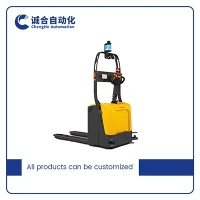
In the era of integrated and intelligent logistics systems, the automatic guided vehicle (AGV) multi - vehicle linkage technology stands out as a transformative force within the supply chain. As a leading supplier of AGV multi - vehicle linkage solutions, I have witnessed firsthand how this technology is reshaping supply chain operations at various levels.
1. Efficiency Enhancement
AGV multi - vehicle linkage significantly boosts the efficiency of the supply chain. In traditional warehousing and logistics settings, manual handling is time - consuming and prone to human errors. Operators may take breaks, make mistakes during loading and unloading, or misdirect inventory. In contrast, AGV multi - vehicle systems can operate continuously, 24/7 if required.
These linked AGVs can be programmed to perform complex tasks in a coordinated manner. For example, while one Customized Counterbalanced Forklift AGV is responsible for lifting heavy pallets from a storage area, another can be transporting goods to a specific workstation. This seamless cooperation shortens the overall cycle time of operations such as goods receiving, storage, and shipping.
A real - world example of this efficiency gain can be seen in large - scale e - commerce warehouses. These warehouses often deal with a high volume of orders daily. With AGV multi - vehicle linkage, different types of AGVs work in tandem to pick items from the shelves, sort them, and pack them for shipping. The time taken to fulfill an order can be reduced from hours to minutes, which directly translates into increased customer satisfaction and loyalty.
2. Space Utilization Optimization
Another significant impact of AGV multi - vehicle linkage on the supply chain is the optimization of space utilization. Warehouses are often limited by physical space, and maximizing storage capacity is crucial for cost - effectiveness.
AGVs can navigate through narrow aisles thanks to their precise guidance systems. In an AGV - enabled warehouse, the width of the aisles can be significantly reduced compared to a traditional warehouse with forklifts driven by humans. This reduction in aisle width allows for more storage racks to be installed, increasing the overall storage capacity of the warehouse.
Moreover, the linked AGVs can stack goods more accurately and in a more organized manner. For instance, a Scissor Lift AGV can lift goods to higher shelves safely and precisely, enabling vertical storage expansion. This kind of vertical storage not only uses the available floor space more efficiently but also makes it possible to store different types of goods at different heights according to their usage frequency and weight.
3. Inventory Management Improvement
Effective inventory management is the cornerstone of a well - functioning supply chain. AGV multi - vehicle linkage provides real - time data collection and accurate movement of inventory, which greatly improves inventory management processes.
Each AGV can be equipped with sensors and communication devices to track the movement of goods. When an AGV picks up or drops off a product, it can instantly update the inventory system. This real - time data allows supply chain managers to have an accurate view of inventory levels at all times. They can easily identify which items are running low, when to reorder, and where the inventory is located within the warehouse.
Furthermore, the ability of AGV multi - vehicle systems to perform automated stocktaking reduces the need for manual counting, which is not only labor - intensive but also prone to errors. Regular and accurate stocktaking can prevent stockouts and overstocking, both of which can have a negative impact on the supply chain. Stockouts can lead to lost sales and dissatisfied customers, while overstocking ties up capital and incurs additional storage costs.
4. Flexibility and Adaptability
The supply chain is a dynamic environment that is constantly affected by factors such as market demand fluctuations, new product launches, and changes in customer preferences. AGV multi - vehicle linkage offers a high degree of flexibility and adaptability to meet these challenges.
The programming of AGVs can be easily modified to adjust to new tasks or changes in the layout of the warehouse. For example, if a company decides to introduce a new product line, the AGV system can be reprogrammed to handle the storage and handling of these new items. Similarly, if the warehouse layout needs to be reconfigured to accommodate more efficient operations, the AGVs can be quickly adjusted to navigate the new routes.
In addition, different types of AGVs can be combined in a multi - vehicle system. For example, an Explosion - proof Collaborative AGV can work together with other standard AGVs in a facility where there are safety requirements for handling explosive materials. This combination allows the supply chain to adapt to different working environments and operational needs.
5. Safety Enhancement
Safety is a top priority in the supply chain, especially in environments where heavy machinery and large volumes of goods are involved. AGV multi - vehicle linkage systems contribute to a safer working environment.
AGVs are equipped with advanced safety features such as collision avoidance sensors. These sensors can detect obstacles in their path and automatically stop or change their route to avoid collisions. In a multi - vehicle system, the AGVs can also communicate with each other to ensure safe distances and coordinated movements.


Compared to human - operated vehicles, AGVs do not get fatigued, distracted, or impaired by factors such as stress or illness. This reduces the risk of accidents caused by human error, such as forklift collisions or improper handling of goods. By creating a safer working environment, companies can reduce the number of workplace injuries and associated costs, as well as improve employee morale.
6. Cost Reduction
The adoption of AGV multi - vehicle linkage in the supply chain brings about significant cost savings in the long run. While the initial investment in an AGV system may be relatively high, the long - term benefits far outweigh the costs.
As mentioned earlier, the increased efficiency and productivity of AGV systems lead to a reduction in labor costs. Fewer human operators are required to perform tasks such as goods handling and transportation. Moreover, the optimization of space utilization reduces the need for large - scale warehouse expansion, which can be a significant capital expense.
In addition, the accurate inventory management provided by AGV systems helps to reduce inventory - related costs. By preventing stockouts and overstocking, companies can save on inventory holding costs and lost sales revenue. The improved safety also leads to lower insurance costs and reduced costs associated with workplace accidents and injuries.
Conclusion
In conclusion, the impact of AGV multi - vehicle linkage on the supply chain is profound and far - reaching. It enhances efficiency, optimizes space utilization, improves inventory management, provides flexibility, enhances safety, and reduces costs. As a supplier of AGV multi - vehicle linkage solutions, we are committed to helping businesses in the supply chain industry leverage this technology to its fullest potential.
If your company is looking to transform its supply chain operations with the benefits of AGV multi - vehicle linkage, I encourage you to reach out for a detailed discussion on how our solutions can be customized to meet your specific needs. We look forward to starting a productive conversation with you and exploring how we can work together to drive your supply chain forward.
References
- [List references related to AGV technology, supply chain management, and any other relevant topics here. For example: "Smith, J. (2020). The Future of Warehouse Automation. Journal of Logistics and Supply Chain Management, 15(2), 45 - 58."]
- [Another reference could be a book: "Johnson, M. (2019). AGV Technology in Modern Supply Chains. Publisher Name."]
Please note that when writing actual references, you need to conduct proper academic research to find reliable sources and format them correctly according to the appropriate citation style (e.g., APA, MLA).