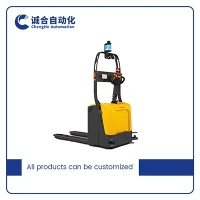
As a provider of customized Automated Guided Vehicles (AGVs), I often encounter inquiries about the adaptability of our products in various challenging environments. One question that comes up frequently is whether a customized AGV can work in a high-temperature environment. In this blog post, I'll delve into this topic, exploring the challenges, solutions, and real-world applications of customized AGVs in high-temperature settings.
Challenges of High-Temperature Environments for AGVs
High-temperature environments pose several significant challenges to the operation of AGVs. First and foremost, the electronic components within the AGV are highly sensitive to temperature. Excessive heat can cause electronic circuits to malfunction, leading to system failures and reduced reliability. For instance, the batteries that power AGVs can experience a significant reduction in performance and lifespan when exposed to high temperatures. The chemical reactions within the battery are accelerated, which can lead to faster degradation and reduced capacity.
Mechanical components are also affected by high temperatures. Lubricants can thin out, reducing their effectiveness in reducing friction between moving parts. This can lead to increased wear and tear, potentially causing mechanical failures. Additionally, the expansion of materials due to heat can cause misalignments in the AGV's structure, affecting its movement accuracy and stability.
The sensors that are crucial for the AGV's navigation and operation are also vulnerable. Optical sensors, for example, can experience reduced accuracy due to thermal effects on the lenses and the light sources. Laser scanners may also be affected, leading to inaccurate mapping and positioning information.
Solutions for Customized AGVs in High-Temperature Environments
Despite these challenges, with proper customization, AGVs can be designed to operate effectively in high-temperature environments. One of the key solutions is thermal management. This involves the use of heat sinks, fans, and cooling systems to dissipate heat from the electronic components. Heat sinks are passive cooling devices that absorb and transfer heat away from the components. Fans can be used to increase the airflow over the heat sinks, enhancing the cooling effect. In some cases, more advanced cooling systems such as liquid cooling may be employed for AGVs operating in extremely high-temperature environments.
For the mechanical components, high-temperature lubricants can be used. These lubricants are formulated to maintain their viscosity and lubricating properties at elevated temperatures, reducing friction and wear. Additionally, the materials used in the AGV's structure can be carefully selected to have low coefficients of thermal expansion. This helps to minimize the dimensional changes due to heat, ensuring the stability and accuracy of the AGV's movement.
The sensors can also be protected from the heat. Special enclosures can be designed to shield the sensors from direct heat exposure while still allowing them to function properly. These enclosures can be equipped with cooling elements to maintain a stable temperature inside. Moreover, the sensor algorithms can be optimized to compensate for the thermal effects, improving their accuracy in high-temperature conditions.
Real-World Applications
There are several industries where customized AGVs are needed to operate in high-temperature environments. One such industry is the steel manufacturing industry. In steel plants, AGVs are used to transport raw materials, semi-finished products, and finished goods between different processing areas. These areas can have extremely high temperatures due to the steelmaking processes. Customized AGVs with the appropriate thermal management systems can ensure the efficient and reliable transportation of materials in these harsh environments.
Another example is the glass manufacturing industry. Glass production involves high-temperature processes such as melting and annealing. AGVs can be used to handle the glass products at various stages of production. The customized AGVs can be designed to withstand the high temperatures near the furnaces and annealing ovens, ensuring the smooth flow of the production process.
Customized AGV Products for High-Temperature Environments
As a customized AGV supplier, we offer a range of products that can be tailored to meet the requirements of high-temperature environments. Our Customized Counterbalanced Forklift AGV is a versatile option that can be equipped with advanced thermal management systems. It is suitable for transporting heavy loads in high-temperature industrial settings such as steel and glass factories.
Our Customized Explosion-proof Automated Guided Cart is another product that can be customized for high-temperature environments. In addition to the thermal management features, it also has explosion-proof capabilities, making it suitable for industries where there are potential explosion hazards in high-temperature areas.
The Explosion-proof Collaborative AGV is designed to work alongside human workers in high-temperature and potentially hazardous environments. It combines the advantages of collaborative operation with the ability to withstand high temperatures, providing a safe and efficient solution for material handling.
Conclusion
In conclusion, a customized AGV can indeed work in a high-temperature environment. By addressing the challenges through proper thermal management, material selection, and sensor protection, AGVs can be designed to operate reliably and efficiently in these harsh conditions. Our customized AGV products offer solutions for various industries that require AGVs in high-temperature settings.


If you are interested in our customized AGV products for high-temperature environments or have specific requirements for your application, we invite you to contact us for procurement and further discussion. We are committed to providing you with the best solutions to meet your needs.
References
- "Thermal Management in Electronic Systems" by T. A. Bergman, A. S. Lavine, F. P. Incropera, and D. P. DeWitt.
- "Mechanical Design and Manufacturing" by J. E. Shigley, C. R. Mischke, and R. G. Budynas.
- Industry reports on AGV applications in high-temperature industries such as steel and glass manufacturing.