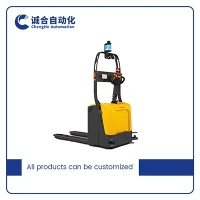
Hey there! I'm a supplier of Composite AGVs, and today I wanna chat about whether a Composite AGV can be used in a textile industry environment. It's a question I get asked a lot, and I'm excited to dig into it with you.
First off, let's talk about what a Composite AGV is. AGV stands for Automated Guided Vehicle. A Composite AGV is a type of AGV that's made up of different materials and components, designed to be more versatile and adaptable to various tasks. These AGVs are equipped with advanced sensors, navigation systems, and software that allow them to move around a facility autonomously, following pre - programmed routes or responding to real - time instructions.
Now, let's take a look at the textile industry. The textile industry is a complex and dynamic environment. It involves processes like spinning, weaving, dyeing, and finishing. There are large amounts of raw materials such as cotton, wool, and synthetic fibers, as well as finished products like fabrics and garments. The floors in textile factories can be dirty due to lint and fiber dust, and there are often long aisles and tight spaces between machinery.
One of the key advantages of using a Composite AGV in the textile industry is its flexibility. In a textile factory, the production process may change frequently depending on customer orders. A Composite AGV can be easily reprogrammed to handle different tasks, such as transporting raw materials from the storage area to the production line, or moving finished products to the warehouse. For example, if a factory decides to change the layout of its production floor, the AGV can quickly adapt to the new routes without the need for major infrastructure changes.
Another important aspect is the safety features of a Composite AGV. In a textile environment, there are many workers moving around, and there's a risk of collisions. Composite AGVs are equipped with multiple safety sensors, such as laser scanners and proximity sensors. These sensors can detect obstacles in their path and stop the AGV immediately to prevent accidents. This not only protects the workers but also reduces the risk of damage to the valuable textile products.
When it comes to the physical design, Composite AGVs are often built with materials that can withstand the harsh conditions in a textile factory. The dust and lint in the air can cause problems for some types of equipment, but a well - designed Composite AGV can be sealed to prevent dust from entering its internal components. This helps to ensure the reliability and longevity of the AGV.
Let's talk about the load - carrying capacity. Textile products can be heavy, especially when they are in large rolls or bundles. Composite AGVs come in different sizes and load - carrying capacities. Whether you need to transport a few small bolts of fabric or a large pallet of finished garments, there's a Composite AGV that can handle the job. For instance, our Customized Extra - Long Automated Guided Cart is designed to carry extra - long and heavy loads, which is very useful in the textile industry for moving large rolls of fabric.
Now, let's consider the navigation system. In a textile factory, there may be a lot of metal machinery and electrical equipment that can interfere with the navigation of an AGV. However, Composite AGVs use advanced navigation technologies such as magnetic tape, QR codes, or natural feature navigation. These technologies are reliable and can work well in the presence of electromagnetic interference.
Cost - effectiveness is also a major factor. Implementing a Composite AGV system in a textile factory can lead to significant cost savings in the long run. By automating the material handling process, you can reduce labor costs, improve efficiency, and minimize the risk of human - error. The initial investment in an AGV system may seem high, but over time, the savings in labor and increased productivity will more than make up for it.
However, there are also some challenges. One of the main challenges is the dust and fiber accumulation on the AGV's sensors. This can affect the accuracy of the sensors and lead to navigation errors. To address this issue, regular maintenance and cleaning of the AGV are required. Another challenge is the need for proper training of the factory workers. They need to understand how to interact with the AGV safely and effectively.
In addition to the standard Composite AGVs, we also offer customized solutions. Our Customized Automatic Guided Pallet Truck is ideal for handling pallets of textile products. It can be customized to fit the specific dimensions and weight requirements of your factory. And if you are dealing with a potentially explosive environment in some areas of your textile factory, our Customized Heavy Duty Explosion - Proof Automatic Transfer Cart is the perfect choice. It's designed to operate safely in hazardous conditions.
In conclusion, a Composite AGV can definitely be used in a textile industry environment. Its flexibility, safety features, load - carrying capacity, and cost - effectiveness make it a great option for textile factories. If you're a textile manufacturer looking to improve your material handling process, I highly recommend considering a Composite AGV system.
If you're interested in learning more about how our Composite AGVs can benefit your textile factory, don't hesitate to reach out. We're always happy to have a chat and discuss your specific needs. Let's work together to make your textile production more efficient and safer.


References:
- Industry reports on automation in the textile industry
- Technical specifications of Composite AGVs