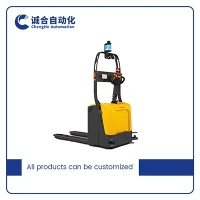
As a supplier of Handling Forklift AGV 2T, I am often asked about the heat dissipation design of these machines. In this blog, I will delve into the importance of heat dissipation, the components that generate heat in a Handling Forklift AGV 2T, and the various heat dissipation methods employed.
The Importance of Heat Dissipation
Heat dissipation is a critical aspect of the design of any electrical or mechanical equipment, and Handling Forklift AGV 2T is no exception. Excessive heat can cause a variety of problems, including reduced efficiency, shortened component lifespan, and even system failures. In a Handling Forklift AGV 2T, which operates continuously for long periods, proper heat dissipation is essential to ensure reliable performance and prevent costly downtime.
Components That Generate Heat
Several components in a Handling Forklift AGV 2T generate heat during operation. The most significant heat sources include:


- Battery: The battery is the power source of the AGV, and it generates a considerable amount of heat during charging and discharging. Lithium-ion batteries, which are commonly used in Handling Forklift AGV 2T, are particularly sensitive to high temperatures. Excessive heat can reduce battery capacity, shorten battery life, and even pose a safety risk.
- Motor: The motor is responsible for driving the AGV and lifting the forks. It converts electrical energy into mechanical energy, and a significant portion of this energy is lost as heat. The motor's efficiency decreases as the temperature rises, which can lead to reduced performance and increased energy consumption.
- Controller: The controller is the brain of the AGV, responsible for managing all aspects of its operation. It contains a large number of electronic components, such as microprocessors, sensors, and power modules, which generate heat during operation. Overheating of the controller can cause malfunctions and system failures.
Heat Dissipation Methods
To ensure proper heat dissipation in a Handling Forklift AGV 2T, several methods are employed:
- Natural Convection: Natural convection is the simplest and most common method of heat dissipation. It relies on the natural movement of air to carry heat away from the heat-generating components. In a Handling Forklift AGV 2T, this can be achieved by designing the chassis and enclosure to allow for proper air circulation. For example, vents can be added to the sides or top of the AGV to allow hot air to escape and cool air to enter.
- Forced Air Cooling: Forced air cooling uses fans to increase the airflow around the heat-generating components. This method is more effective than natural convection and can be used to cool components that generate a large amount of heat, such as the motor and battery. Fans can be installed inside the AGV to direct air towards the components or on the outside to draw air through the vents.
- Liquid Cooling: Liquid cooling is a more advanced method of heat dissipation that uses a liquid coolant, such as water or a special coolant fluid, to transfer heat away from the components. In a Handling Forklift AGV 2T, a liquid cooling system can consist of a radiator, a pump, and a series of pipes and hoses. The coolant is circulated through the pipes and absorbs heat from the components, which is then dissipated through the radiator. Liquid cooling is more efficient than air cooling and can be used to cool high-power components, such as the battery and motor.
- Heat Sinks: Heat sinks are passive cooling devices that are used to increase the surface area of the heat-generating components. They are typically made of a material with high thermal conductivity, such as aluminum or copper, and are designed to absorb and dissipate heat. Heat sinks can be attached to the motor, controller, or other components to increase their cooling efficiency.
Design Considerations
When designing the heat dissipation system for a Handling Forklift AGV 2T, several factors need to be considered:
- Heat Load: The heat load of the AGV is determined by the power consumption of the components and the operating conditions. A higher heat load requires a more efficient heat dissipation system.
- Operating Environment: The operating environment of the AGV can also affect the heat dissipation design. For example, if the AGV operates in a hot and humid environment, additional cooling measures may be required.
- Space Constraints: The design of the AGV chassis and enclosure can limit the available space for the heat dissipation system. Therefore, the heat dissipation system needs to be designed to fit within the available space.
- Maintenance Requirements: The heat dissipation system should be designed to be easy to maintain. This includes easy access to the components for cleaning and replacement and the use of reliable and durable components.
Conclusion
In conclusion, the heat dissipation design of a Handling Forklift AGV 2T is a critical aspect of its performance and reliability. By understanding the components that generate heat, the various heat dissipation methods available, and the design considerations involved, we can design an effective heat dissipation system that ensures the AGV operates at optimal performance and reliability.
If you are interested in our Handling Forklift AGV 2T or other products such as Automated AGV Pallet Stacker, Heavy-Duty AGV Forklift, and Automated Pallet Truck AGV, please feel free to contact us for more information and to discuss your specific requirements. We are committed to providing high-quality products and excellent customer service.
References
- Incropera, F. P., & DeWitt, D. P. (2002). Fundamentals of heat and mass transfer. Wiley.
- Kreith, F., & Bohn, M. S. (2010). Principles of heat transfer. Cengage Learning.
- Wang, Y., & Xu, X. (2018). Thermal management of lithium-ion batteries for electric vehicles. Energy Storage Materials, 12, 136-154.