Hey there! As a supplier of Backpack AGV, I often get asked about the network communication protocol of these nifty machines. So, I thought I'd take some time to break it down for you in a way that's easy to understand.
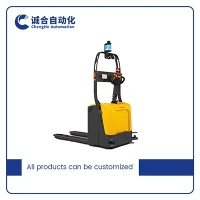
First off, let's talk a bit about what a Backpack AGV is. It's a type of Automated Guided Vehicle that's designed to carry loads on its back, hence the name. These AGVs are super useful in various industries, like warehouses, manufacturing plants, and logistics centers. They can move goods around efficiently, saving time and reducing the need for manual labor.
Now, onto the network communication protocol. This is basically the set of rules that allows different devices to communicate with each other over a network. In the case of Backpack AGVs, the communication protocol is crucial for ensuring that the AGV can receive instructions, send back status updates, and interact with other systems in the facility.
One of the most commonly used network communication protocols for Backpack AGVs is Wi - Fi. Wi - Fi is a wireless networking technology that allows devices to connect to a local area network (LAN) without the need for cables. It's pretty convenient because it gives the AGV the freedom to move around within the range of the Wi - Fi network.
The advantage of using Wi - Fi for Backpack AGV communication is that it's widely available and easy to set up. Most industrial facilities already have Wi - Fi infrastructure in place, so integrating the AGVs into the existing network is usually a breeze. With Wi - Fi, the AGV can receive real - time instructions from the control system, such as where to go and what to pick up. It can also send back important data like its current location, battery status, and any error messages.
However, Wi - Fi also has its limitations. One of the main issues is interference. In a busy industrial environment, there can be a lot of other devices using the same Wi - Fi frequency, which can cause signal degradation and communication problems. Also, the range of Wi - Fi can be limited, especially in large facilities. If the AGV moves too far away from the access point, the connection may become unstable.
Another protocol that's sometimes used is Ethernet. Ethernet is a wired networking technology that offers a more stable and reliable connection compared to Wi - Fi. With Ethernet, the AGV is connected to the network using a cable, which eliminates the risk of interference. This makes it a great choice for applications where high - speed and uninterrupted communication is required.
The downside of Ethernet is that it restricts the movement of the AGV. Since it's connected by a cable, the AGV can only move within the length of the cable. This makes it less suitable for applications where the AGV needs to have a wide range of motion.
Some Backpack AGVs also use Bluetooth for communication. Bluetooth is a short - range wireless technology that's commonly used for connecting devices like smartphones and tablets. It's relatively low - power and easy to set up. Bluetooth can be useful for short - range communication between the AGV and a nearby device, such as a handheld controller or a sensor.
But like Wi - Fi, Bluetooth also has a limited range. It's typically only effective within a few meters, so it's not suitable for large - scale communication within a facility.
In addition to these common protocols, there are also some specialized industrial communication protocols that can be used for Backpack AGVs. For example, Profibus is a popular industrial protocol that's known for its high - speed and reliable communication. It's often used in industrial automation systems to connect various devices, including AGVs.
Another one is Modbus, which is a simple and widely - used protocol for communication between electronic devices. Modbus can be used to transfer data between the AGV and other systems, such as a PLC (Programmable Logic Controller).


As a Backpack AGV supplier, we understand the importance of choosing the right network communication protocol for our customers' needs. That's why we offer a range of options to suit different applications. Whether you need a high - speed and reliable connection or a more flexible wireless solution, we can help you find the best protocol for your Backpack AGV.
If you're interested in our Backpack AGV products, we have a variety of models to choose from. For heavy - duty applications, we offer the Heavy Duty Automatic Transfer Cart. This AGV is designed to handle large and heavy loads with ease.
If you need an AGV that can handle extremely heavy loads, our Heavy load Automated Guided Vehicle is the perfect choice. It can carry up to 20 tons of weight, making it suitable for the most demanding industrial environments.
And if you have specific requirements that our standard models don't meet, we also offer Customized Automated Guided Cart. Our team of experts can work with you to design and build an AGV that's tailored to your exact needs.
If you're thinking about incorporating Backpack AGVs into your operations, I encourage you to get in touch with us. We can provide you with more detailed information about our products, the network communication protocols we use, and how we can help you optimize your material handling processes.
References
- Industrial Networking Handbook: A Guide to Communication Protocols in Automation, by Peter Welander
- Wi - Fi Technology: Principles and Applications, by Andrew Tanenbaum
- Ethernet in Industrial Automation, by Stefan Freitag