


A Composite Automated Guided Vehicle (AGV) is a highly sophisticated and versatile piece of equipment that combines multiple functions and features to meet the diverse needs of modern industrial applications. As a leading Composite AGV supplier, I am often asked about the main components of these remarkable machines. In this blog post, I will delve into the key elements that make up a Composite AGV, highlighting their functions and significance.
1. Navigation System
The navigation system is the heart of a Composite AGV, enabling it to move autonomously and accurately within a given environment. There are several types of navigation technologies commonly used in AGVs, each with its own advantages and applications.
Laser Navigation
Laser navigation systems use lasers to scan the surrounding environment and create a map of the area. By comparing the current scan with the pre - stored map, the AGV can determine its position and plan its path. Laser navigation offers high precision, flexibility, and the ability to adapt to dynamic environments. It is suitable for large - scale warehouses and manufacturing facilities where high - speed and accurate movement is required.
Magnetic Navigation
Magnetic navigation relies on magnetic tapes or strips installed on the floor. The AGV is equipped with magnetic sensors that detect the magnetic field and follow the predefined path. Magnetic navigation is relatively simple, cost - effective, and reliable. It is commonly used in applications where the path is fixed and the environment is relatively stable, such as in assembly lines and small - scale warehouses.
Vision Navigation
Vision navigation systems use cameras to capture images of the environment. The AGV analyzes these images to identify landmarks, obstacles, and its position. Vision navigation offers high flexibility and the ability to adapt to complex environments. It can be used in applications where the environment changes frequently or where there are no fixed guiding elements, such as in flexible manufacturing systems.
2. Power System
The power system provides the energy needed for the AGV to operate. The most common power sources for Composite AGVs are batteries, which offer several advantages such as portability, low maintenance, and the ability to operate in a clean environment.
Battery Types
- Lead - Acid Batteries: Lead - acid batteries are the most traditional and widely used type of battery in AGVs. They are relatively inexpensive, have a long service life, and can provide high - current discharge. However, they are heavy, require regular maintenance, and have a relatively low energy density.
- Lithium - Ion Batteries: Lithium - ion batteries are becoming increasingly popular in AGVs due to their high energy density, long cycle life, and fast charging capabilities. They are lighter than lead - acid batteries, which can improve the AGV's overall performance and efficiency.
Charging Methods
- Opportunity Charging: Opportunity charging allows the AGV to charge during short breaks in its operation, such as when it is waiting at a station or during a pause in the production process. This method ensures that the AGV is always ready for operation and reduces the need for long charging times.
- Automatic Charging Stations: Automatic charging stations are equipped with charging connectors that can automatically connect to the AGV when it arrives at the charging station. This method is convenient and efficient, as it eliminates the need for manual intervention.
3. Control System
The control system is responsible for managing the operation of the AGV, including navigation, speed control, obstacle detection, and communication with other systems.
Central Control Unit
The central control unit (CCU) is the brain of the AGV. It receives input from the navigation system, sensors, and other components, and makes decisions based on pre - programmed algorithms. The CCU controls the movement of the AGV, adjusts its speed, and coordinates with other AGVs or systems in the facility.
Sensor System
The sensor system plays a crucial role in the safe and efficient operation of the AGV. It includes various types of sensors, such as laser scanners, ultrasonic sensors, infrared sensors, and cameras, which are used to detect obstacles, measure distances, and monitor the environment. The sensor system provides real - time feedback to the control system, allowing the AGV to avoid collisions and adapt to changing conditions.
Communication Interface
The communication interface enables the AGV to communicate with other AGVs, control centers, and external systems. It can use wired or wireless communication technologies, such as Ethernet, Wi - Fi, or Bluetooth. The communication interface allows for the exchange of information, such as task assignments, status updates, and error messages, which is essential for the coordinated operation of multiple AGVs in a complex environment.
4. Load Handling System
The load handling system is designed to pick up, transport, and deposit loads. The type of load handling system depends on the specific application and the type of load being handled.
Forklift Mechanism
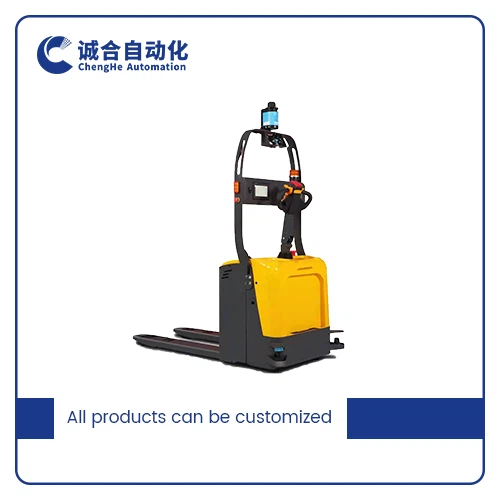
A forklift mechanism is commonly used in AGVs for handling pallets and other heavy loads. It consists of forks that can be raised and lowered to pick up and deposit loads. The forklift mechanism can be equipped with additional features such as side - shifting and tilting to improve the handling efficiency. For those in need of a Customized Automatic Guided Pallet Truck, we offer a range of customized solutions to meet your specific requirements.
Conveyor System
Conveyor systems are used in AGVs for handling boxes, cartons, and other small - to - medium - sized loads. The conveyor can be a belt conveyor, roller conveyor, or chain conveyor, depending on the type of load and the application. The conveyor system allows for the continuous movement of loads and can be integrated with other equipment such as sorting systems and packing machines.
Manipulator Arm
A manipulator arm can be installed on the AGV for handling irregularly shaped or delicate loads. The manipulator arm can be programmed to perform various tasks, such as picking, placing, and assembling parts. It offers high flexibility and the ability to handle complex loads.
5. Safety System
Safety is of utmost importance in the operation of AGVs. The safety system is designed to protect the AGV, the operators, and the surrounding environment from potential hazards.
Bumper and Emergency Stop Button
The AGV is equipped with bumpers around its perimeter. When the bumper comes into contact with an obstacle, it triggers an immediate stop of the AGV. Additionally, there are emergency stop buttons located on the AGV that can be pressed by the operator in case of an emergency.

Obstacle Detection Sensors
In addition to the sensors used for navigation, the AGV is also equipped with obstacle detection sensors such as laser scanners and ultrasonic sensors. These sensors continuously monitor the area around the AGV and detect any obstacles in its path. If an obstacle is detected, the AGV will either slow down, stop, or change its path to avoid a collision.
Warning Devices
The AGV is equipped with warning devices such as lights and sirens to alert operators and other personnel in the vicinity. These warning devices are activated when the AGV is in motion, approaching an intersection, or detecting an obstacle.
6. Structural Frame
The structural frame provides the physical support for all the components of the AGV. It is designed to be strong, rigid, and lightweight to ensure the stability and maneuverability of the AGV.
Material Selection
The structural frame is typically made of high - strength steel or aluminum alloys. Steel frames offer high strength and durability, while aluminum frames are lighter and more corrosion - resistant. The choice of material depends on the specific application and the requirements of the AGV.
Design Considerations
The design of the structural frame takes into account factors such as the weight distribution, the center of gravity, and the load - carrying capacity of the AGV. It is also designed to accommodate the installation of all the components, including the navigation system, power system, control system, and load handling system.
Conclusion
In conclusion, a Composite AGV is a complex and sophisticated machine that consists of several key components, each playing a crucial role in its operation. The navigation system enables the AGV to move autonomously, the power system provides the energy, the control system manages the operation, the load handling system handles the loads, the safety system ensures the safety, and the structural frame provides the physical support.
As a Composite AGV supplier, we understand the importance of these components and offer a wide range of customized solutions to meet the diverse needs of our customers. Whether you need a Customized Heavy Duty Explosion - Proof Automatic Transfer Cart for a hazardous environment or a Customized Counterbalanced Forklift AGV for a warehouse application, we have the expertise and experience to provide you with the best solution.
If you are interested in learning more about our Composite AGV products or would like to discuss your specific requirements, please feel free to contact us. We look forward to the opportunity to work with you and help you optimize your material handling processes.
References
- "Automated Guided Vehicles: Technology, Implementation, and Operations" by Peter R. Tanchoco
- "Industrial Automation and Robotics" by John Billingsley
- "Battery Technologies for Electric Vehicles" by K. M. Abraham


