Hey there! As a supplier of AGV Multi Vehicle Linkage, I've been diving deep into the world of optimizing the operation time of these systems. In this blog, I'll share some practical tips and insights that can help you get the most out of your AGV multi - vehicle setup.
First off, let's understand what AGV Multi Vehicle Linkage is all about. It's a system where multiple Automated Guided Vehicles work together in a coordinated manner to perform various tasks, like moving goods in a warehouse or factory. The key to optimizing operation time lies in making this coordination as efficient as possible.
Route Planning and Optimization
One of the most crucial aspects is route planning. You need to make sure that each AGV has the shortest and most efficient path to its destination. This not only saves time but also reduces wear and tear on the vehicles.
A good way to start is by mapping out the entire area where the AGVs will operate. Identify all the potential obstacles, like storage racks, workstations, and other equipment. Then, use advanced software to calculate the best routes for each AGV.
For example, if you have a warehouse with multiple aisles, the software can determine which aisle is the quickest for an AGV to reach a particular storage location. It can also take into account the traffic flow, so that AGVs don't get stuck behind each other.
But route planning isn't a one - time thing. The layout of your facility might change over time, new obstacles might be introduced, or the demand for certain products might shift. So, you need to regularly review and update the routes.
Traffic Management
Managing the traffic of multiple AGVs is another challenge. Just like on a busy road, if there's no proper traffic management, you'll end up with congestion and delays.
One approach is to implement a priority system. For instance, if an AGV is carrying a high - priority order, it can be given precedence over other vehicles. This ensures that critical tasks are completed on time.
You can also use sensors and communication systems to prevent collisions. Each AGV can be equipped with sensors that detect the presence of other vehicles in its vicinity. If a potential collision is detected, the AGV can automatically stop or change its course.
Moreover, setting up virtual lanes for the AGVs can help in organizing the traffic. Similar to lanes on a road, these virtual lanes define the path that each AGV should follow, reducing the chances of confusion and collisions.
Task Allocation
Proper task allocation is essential for optimizing operation time. You need to assign tasks to the AGVs in a way that maximizes their productivity.
Start by analyzing the workload and the capabilities of each AGV. Some AGVs might be better suited for heavy - duty tasks, while others are more efficient for light - weight or quick - turnaround jobs.
For example, if you have a mix of small and large items to move, you can assign the small items to the smaller, more agile AGVs, and the large items to the larger, more powerful ones.
Another important factor is the proximity of the tasks. Try to group tasks that are close to each other and assign them to the same AGV. This reduces the travel time between tasks and increases the overall efficiency.
Maintenance and Upkeep
Regular maintenance of the AGVs is often overlooked but is crucial for optimizing operation time. A well - maintained AGV is less likely to break down, which means less downtime.


Create a maintenance schedule for each AGV. This should include regular inspections, cleaning, and replacement of worn - out parts. For example, the batteries of the AGVs need to be checked and charged regularly to ensure they have enough power to complete their tasks.
Also, keep an eye on the software of the AGVs. Software updates can improve the performance and functionality of the vehicles. They might include bug fixes, new features for better route planning, or enhanced traffic management capabilities.
Training and Staff Awareness
Your staff also plays a significant role in optimizing the operation time of AGV Multi Vehicle Linkage. They need to be well - trained in operating and managing the AGV system.
Provide comprehensive training to your employees on how to use the AGV control software, how to perform basic maintenance tasks, and how to handle emergencies.
Moreover, raise awareness among the staff about the importance of not interfering with the AGVs' operation. For example, they should avoid blocking the AGV paths or leaving obstacles in the way.
Customized AGVs for Specific Needs
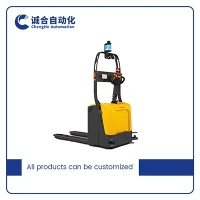
If your operations have unique requirements, consider Customized AGV Forklift. These forklifts can be tailored to fit your specific tasks, such as lifting heavy loads to a certain height or operating in a narrow - aisle environment.
Similarly, Customized Counterbalanced Forklift AGV can be designed to handle different load capacities and working conditions. They offer more flexibility and can significantly improve the efficiency of your AGV multi - vehicle system.
AGV Multi - Vehicle Coordination
To achieve seamless operation of multiple AGVs, you need to focus on AGV Multi - Vehicle Coordination. This involves integrating all the AGVs into a single system and ensuring that they communicate effectively with each other.
Advanced coordination software can be used to synchronize the movements of the AGVs. It can manage the tasks, routes, and traffic in real - time, making sure that all the AGVs work together in harmony.
In conclusion, optimizing the operation time of AGV Multi Vehicle Linkage is a multi - faceted process. It involves careful route planning, effective traffic management, proper task allocation, regular maintenance, staff training, and the use of customized AGVs.
If you're interested in improving the efficiency of your AGV multi - vehicle system, I encourage you to reach out for a procurement discussion. We can work together to find the best solutions for your specific needs.
References
- Industry reports on AGV technology and operation optimization.
- Case studies of successful AGV Multi Vehicle Linkage implementations.