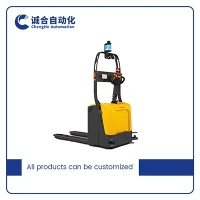
Hey there! As a supplier of Roller AGVs, I've been getting a lot of questions lately about how to ensure the synchronization of multiple Roller AGVs. It's a crucial issue, especially in large - scale industrial operations where these AGVs need to work together seamlessly. So, I thought I'd share some insights on this topic.
Understanding the Basics of Roller AGV Synchronization
First off, let's quickly go over what Roller AGVs are. They are Automated Guided Vehicles equipped with rollers, which are great for transporting goods in a variety of industries, like manufacturing, warehousing, and logistics. When you have multiple Roller AGVs in operation, synchronization means that they move, stop, and perform tasks in a coordinated way. This is essential to prevent collisions, improve efficiency, and make the most of your investment.
Communication Systems
One of the key factors in synchronizing multiple Roller AGVs is having a reliable communication system. AGVs need to be able to "talk" to each other and to a central control system. There are a few different ways to achieve this.
Wi - Fi Communication
Wi - Fi is a popular choice for communication between AGVs and the control center. It offers a relatively high - speed and flexible connection. With Wi - Fi, AGVs can send and receive real - time data such as their position, speed, and the status of their tasks. However, it does have some limitations. For example, in large industrial environments with lots of metal structures, Wi - Fi signals can be blocked or weakened. This can lead to communication delays or even complete loss of connection, which is a big no - no when it comes to AGV synchronization.
Bluetooth Communication
Bluetooth is another option. It's a short - range wireless technology that can be used for direct communication between nearby AGVs. This can be useful for tasks like coordinating the transfer of goods between two AGVs. The advantage of Bluetooth is that it's relatively low - cost and easy to set up. But, its short range means that it's not suitable for large - scale synchronization across a wide area.
Wired Communication
For a more stable and reliable connection, some companies opt for wired communication. This involves running cables between the AGVs and the control system. While it provides a very consistent connection, it can be expensive and difficult to install, especially in an environment where AGVs need to move freely.
Navigation and Positioning Systems
Accurate navigation and positioning are also vital for AGV synchronization. There are several types of navigation systems available.


Laser Navigation
Laser navigation is a common method. AGVs use lasers to scan their surroundings and create a map of the environment. By comparing their current position to the map, they can determine where they are and plan their routes. Laser navigation is very accurate, but it can be affected by dust, debris, or changes in the environment. For example, if a new piece of equipment is placed in the area, it can disrupt the laser's scanning pattern.
Vision Navigation
Vision navigation uses cameras to recognize landmarks and objects in the environment. This can be a very effective way to navigate, especially in areas with complex layouts. However, it can be sensitive to lighting conditions. If the lighting in the area changes, the cameras may have trouble recognizing the landmarks accurately.
Magnetic Navigation
Magnetic navigation involves laying magnetic strips on the floor. The AGVs use sensors to detect the magnetic field and follow the path. It's a simple and cost - effective method, but it's not very flexible. If you need to change the AGV's route, you have to physically change the magnetic strips.
Central Control Systems
A central control system is like the brain of the AGV operation. It's responsible for coordinating the movements of all the AGVs in the area. The control system needs to be able to handle a large amount of data in real - time. It has to know the position, speed, and task status of each AGV at all times.
When an AGV needs to perform a task, it sends a request to the control system. The control system then checks the availability of resources, such as the path and the destination. If everything is clear, it sends a command back to the AGV, allowing it to proceed. This way, the control system can ensure that all the AGVs are working together in a synchronized manner.
Task Scheduling
Proper task scheduling is also an important part of AGV synchronization. The control system needs to assign tasks to the AGVs in an efficient way. For example, if there are multiple tasks that need to be completed in a certain area, the control system should assign the tasks to the AGVs that are closest to the area. This reduces the travel time of the AGVs and improves overall efficiency.
It's also important to consider the priority of the tasks. Some tasks may be more urgent than others, and the control system should be able to prioritize them accordingly. For example, if there is a task that needs to be completed immediately to keep the production line running, the control system should assign it to an available AGV as soon as possible.
Safety Measures
Safety is always a top priority when it comes to AGV operation. In a synchronized system, it's important to have safety measures in place to prevent collisions between AGVs.
Bumper Sensors
Most AGVs are equipped with bumper sensors. These sensors detect when the AGV comes into contact with an object, such as another AGV or a stationary obstacle. When the sensor is triggered, the AGV stops immediately to prevent damage.
Proximity Sensors
Proximity sensors are used to detect the presence of other AGVs or objects in the vicinity. They can provide an early warning to the AGV, allowing it to slow down or change its route to avoid a collision.
Emergency Stop Buttons
Emergency stop buttons are also essential. They allow operators to quickly stop all the AGVs in case of an emergency. This can prevent serious accidents and protect both the equipment and the personnel in the area.
Case Studies
Let's take a look at some real - world examples of how companies have achieved AGV synchronization.
In a large manufacturing plant, a company used a combination of Wi - Fi communication and laser navigation to synchronize their Roller AGVs. The Wi - Fi allowed the AGVs to communicate with the central control system in real - time, while the laser navigation provided accurate positioning. The control system was able to assign tasks to the AGVs based on their location and the priority of the tasks. As a result, the plant was able to increase its production efficiency by 30%.
Another company in the logistics industry used magnetic navigation and a central control system to synchronize their AGVs. The magnetic strips on the floor provided a reliable path for the AGVs, and the control system ensured that all the AGVs were working together smoothly. This reduced the error rate in the warehouse by 20%.
Conclusion
Ensuring the synchronization of multiple Roller AGVs is a complex but achievable goal. By using the right communication systems, navigation and positioning systems, central control systems, and task scheduling methods, you can make your AGV operation more efficient and safe.
If you're in the market for Roller AGVs or need help with AGV synchronization, we're here to assist you. We offer a range of Heavy load Automated Guided Vehicle, Customized Automated Guided Cart, and Ultra - long Automated Guided Cart to meet your specific needs. Contact us today to start a conversation about how we can help you optimize your AGV operation.
References
- Some relevant industry whitepapers on AGV technology
- Case studies from manufacturing and logistics companies
- Technical manuals from AGV manufacturers