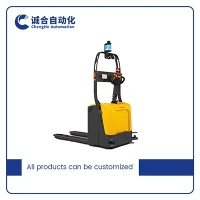
Hey there! As a supplier of Heavy Duty AGVs, I often get asked about how to adjust the speed of these powerful machines. It's a crucial aspect, especially when you're dealing with large loads and specific operational requirements. In this blog, I'll share some practical tips on adjusting the speed of Heavy Duty AGVs based on my experience in the industry.
First off, let's understand why speed adjustment matters. Heavy Duty AGVs are used in various industrial settings, from warehouses to manufacturing plants. Depending on the task at hand, you might need to slow down the AGV for precise maneuvers, like loading and unloading heavy goods, or speed it up for long - distance transportation within the facility. Incorrect speed can lead to inefficiencies, increased wear and tear on the machine, and even safety hazards.
Alright, so how do we actually adjust the speed? There are a few different methods, and we'll go through each one.
1. Software - based Speed Control
Most modern Heavy Duty AGVs come with advanced software that allows for easy speed adjustment. This is definitely one of the most convenient ways. You can access the control panel, which is usually connected to the AGV's main system. Through the software interface, you can set a specific speed value, whether it's in meters per minute or miles per hour depending on your preference.
For example, if you have an Heavy Duty Automatic Transfer Cart that needs to move slowly while picking up a heavy load, you can simply reduce the speed in the software. On the other hand, when it's time to move to another location quickly, you can increase the speed with just a few clicks.
One of the advantages of software - based control is its precision. You can set the speed to a very specific value, and the AGV will try to maintain that speed as accurately as possible. Also, you can program different speed profiles for different tasks. For instance, you can create a profile where the AGV starts slowly, accelerates to a certain speed, and then slows down again when approaching its destination.
2. Manual Speed Limiters
In some cases, you might also use manual speed limiters. These are physical devices that you can install on the AGV. They work by restricting the maximum speed that the AGV can reach. It's like putting a cap on how fast it can go.


Manual speed limiters are great for situations where you want a simple and reliable way to control the speed. For example, if you have an area in your facility where you don't want the AGV to go too fast due to safety concerns, you can set the manual speed limiter accordingly. This is a good option for older AGV models that might not have the most advanced software systems.
However, one drawback of manual speed limiters is that they're not as flexible as software - based control. Once you set the limit, it's fixed until you manually change it again. So, if your operational requirements change frequently, it might not be the most practical solution.
3. Sensor - based Speed Adjustment
Another smart way to adjust the speed of a Heavy Duty AGV is through sensors. AGVs are often equipped with various sensors, such as proximity sensors, laser scanners, and vision sensors. These sensors can detect obstacles, the distance between the AGV and other objects, and the terrain conditions.
Based on the information from the sensors, the AGV can automatically adjust its speed. For example, if the proximity sensor detects that there's an object in front of the AGV, it can slow down to avoid a collision. Similarly, if the vision sensor detects a rough terrain, the AGV can reduce its speed to ensure a smooth and safe ride.
The Ultra - long Automated Guided Cart can benefit greatly from sensor - based speed adjustment. Its long body requires more precise control, and sensors can help it adapt to different situations in real - time.
Factors to Consider When Adjusting Speed
When you're adjusting the speed of a Heavy Duty AGV, there are several factors you need to take into account.
Load Weight
The weight of the load the AGV is carrying has a significant impact on its speed. A heavier load will generally require a lower speed. This is because the AGV needs more power to move a heavy load, and going too fast can put extra stress on the motors and other components. So, before you adjust the speed, make sure you know the weight of the load.
Terrain Conditions
The type of terrain the AGV is moving on also matters. If it's a smooth, flat surface, the AGV can usually handle a higher speed. But if the terrain is rough, uneven, or has slopes, you'll need to slow down the AGV. This helps prevent damage to the AGV and ensures the stability of the load.
Safety Regulations
Don't forget about safety regulations. Different industries and facilities have their own safety standards regarding the speed of AGVs. Make sure you comply with these regulations when adjusting the speed. Safety should always be your top priority.
Troubleshooting Speed - related Issues
Sometimes, you might encounter problems when adjusting the speed of your Heavy Duty AGV. Here are some common issues and how to fix them.
Inconsistent Speed
If the AGV's speed is inconsistent, it could be due to a software glitch. Try restarting the AGV's control system and see if that solves the problem. If not, there might be an issue with the sensors or the motor. In this case, it's best to contact a professional technician for further inspection.
Unable to Reach Set Speed
If the AGV can't reach the speed you've set in the software, it could be because the load is too heavy or there's a mechanical problem. Check the load weight and make sure it's within the AGV's capacity. If the load is okay, then it's time to check the motor, gears, and other mechanical components for any signs of damage.
Conclusion
Adjusting the speed of a Heavy Duty AGV is an important skill that can improve the efficiency and safety of your operations. Whether you use software - based control, manual speed limiters, or sensor - based adjustment, make sure you consider factors like load weight, terrain conditions, and safety regulations.
If you're in the market for a Heavy load Automated Guided Vehicle or need more advice on speed adjustment and other AGV - related issues, don't hesitate to reach out. We're here to help you make the most of your AGV investment and ensure smooth operations in your facility.
References
- Industry best practices for AGV operation and maintenance.
- Manufacturer's manuals for Heavy Duty AGVs.