In today's highly competitive manufacturing landscape, lean manufacturing has emerged as a cornerstone strategy for companies aiming to enhance efficiency, reduce waste, and optimize operations. At the heart of this transformative approach lies the ability to streamline material handling and logistics processes, ensuring that resources are utilized effectively and value is delivered to customers in the most efficient manner possible. As a leading provider of AGV (Automated Guided Vehicle) multi-vehicle linkage solutions, I am excited to share how our cutting-edge technology supports the lean manufacturing concept and empowers businesses to achieve new heights of productivity and competitiveness.
Understanding Lean Manufacturing
Lean manufacturing is a systematic approach to eliminating waste and maximizing value in the production process. It is based on the principles of continuous improvement, respect for people, and the pursuit of perfection. By focusing on the elimination of non-value-added activities, such as overproduction, waiting, transportation, inventory, motion, overprocessing, and defects, lean manufacturing aims to create a more efficient and responsive manufacturing system that delivers high-quality products at a lower cost.
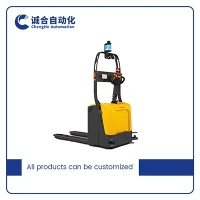
One of the key enablers of lean manufacturing is the use of advanced automation technologies, such as AGVs, to optimize material handling and logistics processes. AGVs are self-guided vehicles that can transport materials, products, and equipment within a manufacturing facility without the need for human intervention. They are equipped with sensors, cameras, and navigation systems that allow them to navigate through the facility safely and efficiently, avoiding obstacles and following pre-defined routes.
The Role of AGV Multi-Vehicle Linkage in Lean Manufacturing
AGV multi-vehicle linkage refers to the ability of multiple AGVs to work together in a coordinated manner to perform complex material handling tasks. This technology allows businesses to create a flexible and scalable material handling system that can adapt to changing production requirements and optimize the flow of materials throughout the manufacturing process.
Here are some of the ways in which AGV multi-vehicle linkage supports the lean manufacturing concept:
1. Elimination of Waste
One of the primary goals of lean manufacturing is to eliminate waste in all its forms. AGV multi-vehicle linkage helps to achieve this goal by reducing the need for manual material handling, which is often a source of waste in the manufacturing process. By automating material transportation, AGVs can eliminate the time and effort required for manual labor, reduce the risk of errors and accidents, and improve the overall efficiency of the material handling process.
In addition, AGV multi-vehicle linkage can help to reduce inventory levels by enabling just-in-time (JIT) delivery of materials and products. By delivering materials and products to the point of use exactly when they are needed, AGVs can eliminate the need for large inventories of raw materials and finished goods, which can tie up capital and increase the risk of obsolescence.
2. Continuous Improvement
Lean manufacturing is a continuous improvement process that requires businesses to constantly evaluate and optimize their operations. AGV multi-vehicle linkage provides businesses with real-time data and analytics on the performance of their material handling system, which can be used to identify areas for improvement and implement corrective actions.

For example, by analyzing the data collected by AGVs, businesses can identify bottlenecks in the material handling process, such as congestion at intersections or delays in loading and unloading. This information can be used to optimize the routing of AGVs, adjust the scheduling of material deliveries, and improve the overall efficiency of the material handling system.
3. Flexibility and Scalability
In today's dynamic manufacturing environment, businesses need to be able to adapt quickly to changing production requirements. AGV multi-vehicle linkage provides businesses with the flexibility and scalability they need to respond to these changes.
By using a modular and configurable AGV system, businesses can easily add or remove AGVs from the system as needed to meet changing production demands. This allows businesses to scale their material handling system up or down without having to make significant capital investments in new equipment.
In addition, AGV multi-vehicle linkage allows businesses to easily reconfigure the routing of AGVs to accommodate changes in the layout of the manufacturing facility or the introduction of new products or processes. This flexibility enables businesses to optimize the flow of materials throughout the manufacturing process and improve the overall efficiency of their operations.
4. Safety and Reliability
Safety is a top priority in the manufacturing industry, and AGV multi-vehicle linkage helps to ensure the safety of workers and equipment. AGVs are equipped with a variety of safety features, such as sensors, cameras, and emergency stop buttons, that allow them to detect and avoid obstacles and operate safely in the presence of human workers.
In addition, AGV multi-vehicle linkage provides businesses with a reliable and consistent material handling solution. By using advanced navigation and control systems, AGVs can operate with a high degree of accuracy and precision, reducing the risk of errors and downtime.
Our AGV Multi-Vehicle Linkage Solutions
As a leading provider of AGV multi-vehicle linkage solutions, we offer a wide range of AGV models and configurations to meet the diverse needs of our customers. Our AGVs are designed to be highly flexible, scalable, and reliable, and they can be customized to meet the specific requirements of your manufacturing facility.
Some of our popular AGV models include:
- Composite AGV With Robotic Arm: This AGV is equipped with a robotic arm that can be used to perform a variety of tasks, such as picking and placing objects, assembling products, and inspecting parts.
- Customized Explosion - proof Backpack AGV for Ammunition Transportation: This AGV is designed for use in hazardous environments, such as ammunition manufacturing facilities. It is equipped with explosion-proof components and safety features to ensure the safe transportation of ammunition.
- Automatic Stacker AGV: This AGV is designed for use in warehousing and logistics applications. It can be used to stack and retrieve pallets and other materials from storage racks, improving the efficiency of the storage and retrieval process.
In addition to our standard AGV models, we also offer custom AGV solutions that are tailored to the specific needs of your manufacturing facility. Our team of experienced engineers and technicians can work with you to design and develop an AGV system that meets your exact requirements, from the layout and configuration of the system to the selection of the appropriate AGV models and components.
Contact Us for a Consultation
If you are interested in learning more about how our AGV multi-vehicle linkage solutions can support your lean manufacturing initiatives, we invite you to contact us for a consultation. Our team of experts will be happy to discuss your specific needs and requirements and provide you with a customized solution that is tailored to your business.

By implementing our AGV multi-vehicle linkage solutions, you can optimize your material handling and logistics processes, reduce waste, improve efficiency, and enhance the overall competitiveness of your manufacturing operation. Don't miss out on this opportunity to take your business to the next level. Contact us today to get started.
References
- Womack, J. P., & Jones, D. T. (1996). Lean thinking: Banish waste and create wealth in your corporation. Simon & Schuster.
- Liker, J. K. (2004). The Toyota way: 14 management principles from the world's greatest manufacturer. McGraw-Hill.
- Schonberger, R. J. (1982). Japanese manufacturing techniques: Nine hidden lessons in simplicity. Free Press.