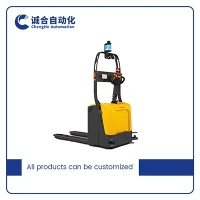
As a supplier of Forklift Automated Guided Vehicles (AGVs), I've witnessed firsthand the remarkable advancements in AGV technology and its widespread adoption across various industries. One of the most critical aspects that often comes under scrutiny is how Forklift AGVs perform in areas with strong electromagnetic interference (EMI). In this blog post, I'll delve into this topic, exploring the challenges, solutions, and real-world performance of our Forklift AGVs in such environments.


Understanding Electromagnetic Interference
Electromagnetic interference refers to the disturbance that affects an electrical circuit due to either electromagnetic induction or electromagnetic radiation emitted from an external source. In industrial settings, EMI can originate from a variety of sources, including large motors, welding equipment, radio frequency (RF) transmitters, and power lines. These sources can generate electromagnetic fields that interfere with the normal operation of electronic devices, including Forklift AGVs.
The impact of EMI on Forklift AGVs can be significant. It can disrupt the communication between the AGV and its control system, leading to errors in navigation, incorrect sensor readings, and even system failures. In extreme cases, EMI can cause the AGV to deviate from its intended path, pose safety risks to personnel and equipment, and result in costly downtime.
Challenges Faced by Forklift AGVs in High-EMI Areas
Forklift AGVs rely on a complex network of sensors, controllers, and communication systems to operate autonomously. These components are sensitive to electromagnetic fields, and even minor interference can have a detrimental effect on their performance. Some of the key challenges faced by Forklift AGVs in high-EMI areas include:
- Sensor Malfunction: Forklift AGVs use a variety of sensors, such as laser scanners, cameras, and proximity sensors, to navigate and detect obstacles. EMI can cause these sensors to produce inaccurate readings, leading to incorrect decision-making by the AGV. For example, a laser scanner may detect false obstacles or fail to detect real obstacles due to EMI, increasing the risk of collisions.
- Communication Disruptions: AGVs communicate with their control systems and other devices in the warehouse using wireless protocols such as Wi-Fi or Bluetooth. EMI can interfere with these wireless signals, causing communication disruptions and data loss. This can result in delays in command execution, inaccurate position updates, and loss of synchronization between the AGV and the control system.
- Controller Errors: The controllers that manage the movement and operation of Forklift AGVs are also susceptible to EMI. Electromagnetic interference can cause errors in the controller's programming, leading to unexpected behavior, such as sudden stops, jerky movements, or incorrect path following. These errors can not only affect the efficiency of the AGV but also pose safety risks to the surrounding environment.
Our Solutions to Mitigate EMI Effects
At our company, we understand the challenges posed by electromagnetic interference and have developed a range of solutions to ensure the reliable performance of our Forklift AGVs in high-EMI areas. Our approach to EMI mitigation involves a combination of hardware design, software algorithms, and testing procedures.
- EMI-Resistant Hardware Design: We use high-quality components and materials that are designed to be resistant to electromagnetic interference. Our AGVs are equipped with shielded cables, filters, and grounding systems to minimize the impact of EMI on the electrical circuits. Additionally, we conduct thorough electromagnetic compatibility (EMC) testing during the design and manufacturing process to ensure that our AGVs meet strict EMI standards.
- Advanced Software Algorithms: Our software algorithms are designed to detect and compensate for EMI-induced errors in real-time. The AGVs continuously monitor the sensor readings and communication signals for any signs of interference and adjust their operation accordingly. For example, if a sensor reading is deemed unreliable due to EMI, the AGV can use alternative sensors or algorithms to make decisions and navigate safely.
- Regular Testing and Maintenance: We recommend regular testing and maintenance of our Forklift AGVs to ensure their continued performance in high-EMI areas. Our technicians conduct periodic EMC testing to identify any potential EMI issues and take corrective actions. We also provide training and support to our customers on how to operate and maintain their AGVs in EMI-prone environments.
Real-World Performance of Our Forklift AGVs in High-EMI Areas
To demonstrate the effectiveness of our solutions, let's take a look at some real-world examples of how our Forklift AGVs have performed in areas with strong electromagnetic interference.
- Automotive Manufacturing Plant: In an automotive manufacturing plant, our Omni-directional Forklift AGV was deployed in an area with high levels of EMI from large motors and welding equipment. Despite the challenging environment, the AGV was able to operate smoothly and efficiently, thanks to its EMI-resistant hardware design and advanced software algorithms. The AGV accurately navigated through the plant, transported materials to the designated locations, and maintained reliable communication with the control system.
- Warehouse with RF Transmitters: In a warehouse with multiple RF transmitters, our AGV Pallet Truck - 3T was used to handle palletized goods. The RF signals from the transmitters caused some interference with the AGV's wireless communication, but the AGV's software algorithms were able to detect and compensate for the interference in real-time. As a result, the AGV continued to operate without any significant disruptions, ensuring the smooth flow of materials in the warehouse.
- Heavy Industry Application: In a heavy industry application, our Heavy-Duty AGV Forklift was used to transport heavy loads in an area with strong electromagnetic fields from power lines. The AGV's robust hardware design and advanced EMI mitigation techniques allowed it to operate safely and reliably in this challenging environment. The AGV was able to lift and transport heavy loads without any issues, demonstrating its ability to perform in high-EMI areas.
Conclusion
In conclusion, electromagnetic interference can pose significant challenges to the performance of Forklift AGVs in industrial environments. However, with the right solutions and technologies, it is possible to mitigate the effects of EMI and ensure the reliable operation of AGVs in high-EMI areas. Our company's Forklift AGVs are designed and built to withstand the challenges of electromagnetic interference, thanks to our EMI-resistant hardware design, advanced software algorithms, and regular testing and maintenance.
If you're considering implementing Forklift AGVs in your warehouse or manufacturing facility, especially in areas with strong electromagnetic interference, we encourage you to contact us for a consultation. Our team of experts can help you evaluate your requirements, recommend the most suitable AGV solutions, and provide you with the support and training you need to ensure the successful implementation and operation of your AGVs. Let's work together to optimize your material handling processes and improve the efficiency and safety of your operations.
References
- Electromagnetic Compatibility (EMC) Standards and Guidelines
- Industrial Automation and Control Systems: Electromagnetic Interference and Mitigation Techniques
- Case Studies on the Use of Forklift AGVs in High-EMI Environments