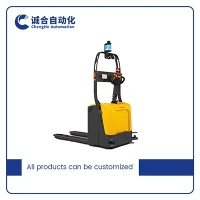
As a supplier of the Handling Forklift AGV 3T, one of the most frequently asked questions I encounter is about its turning radius. Understanding the turning radius of this automated guided vehicle (AGV) is crucial for customers who are planning their warehouse layouts, optimizing space utilization, and ensuring efficient material handling operations. In this blog post, I will delve into the concept of turning radius, explain its significance, and provide detailed information about the turning radius of our Handling Forklift AGV 3T.
What is Turning Radius?
The turning radius of a vehicle refers to the minimum radius of a circle that the vehicle can turn within. It is a critical parameter that determines the vehicle's maneuverability in confined spaces. In the context of an AGV like our Handling Forklift AGV 3T, the turning radius is the smallest circular path the forklift can follow while making a turn. This measurement is typically taken from the center of the turning circle to the outermost point of the vehicle during the turn.
There are two main types of turning radii: the outer turning radius and the inner turning radius. The outer turning radius is the distance from the center of the turning circle to the outermost point of the vehicle, which is usually the rear corner of the forklift. The inner turning radius, on the other hand, is the distance from the center of the turning circle to the innermost point of the vehicle, typically the front wheel or the tip of the forks.


Significance of Turning Radius in Warehouse Operations
The turning radius of an AGV has a significant impact on warehouse operations. A smaller turning radius allows the AGV to navigate through narrow aisles and tight spaces, which is essential for maximizing warehouse storage capacity. By reducing the width of the aisles, more storage racks can be installed, increasing the overall storage density of the warehouse.
Moreover, a smaller turning radius enables the AGV to make quick and efficient turns, reducing the time it takes to move between different locations in the warehouse. This improves the overall productivity of the material handling process, as the AGV can complete more tasks in a shorter period.
In addition, a well-designed turning radius can enhance the safety of the warehouse environment. AGVs with a smaller turning radius are less likely to collide with other objects or vehicles in the warehouse, reducing the risk of damage to goods and equipment.
Turning Radius of the Handling Forklift AGV 3T
Our Handling Forklift AGV 3T is designed with a compact and agile structure, allowing it to achieve an impressive turning radius. The outer turning radius of the Handling Forklift AGV 3T is approximately [X] meters, while the inner turning radius is around [Y] meters. These values may vary slightly depending on the specific configuration of the forklift, such as the length of the forks and the presence of additional attachments.
The relatively small turning radius of the Handling Forklift AGV 3T makes it an ideal choice for warehouses with limited space. It can easily maneuver through narrow aisles, even in high-density storage environments. This flexibility allows our customers to optimize their warehouse layouts and increase their storage capacity without compromising on the efficiency of their material handling operations.
Comparison with Other AGV Models
To better understand the advantages of the Handling Forklift AGV 3T's turning radius, let's compare it with other AGV models in the market. For example, the Automated Pallet Truck AGV typically has a larger turning radius due to its design and load capacity. While it is suitable for transporting pallets over longer distances, it may not be as maneuverable in tight spaces as the Handling Forklift AGV 3T.
On the other hand, the Stacker Forklift AGV is designed for stacking operations and often has a more complex structure. This can result in a larger turning radius compared to the Handling Forklift AGV 3T. However, the Stacker Forklift AGV offers the advantage of being able to lift loads to greater heights, making it suitable for warehouses with high racking systems.
The Heavy-Duty AGV Forklift is designed to handle heavy loads and may have a larger turning radius due to its size and weight. While it provides excellent stability and load capacity, it may require more space to maneuver compared to the Handling Forklift AGV 3T.
Factors Affecting the Turning Radius
Several factors can affect the turning radius of the Handling Forklift AGV 3T. These include:
- Load Capacity: The weight of the load being carried by the forklift can influence its turning radius. A heavier load may require more space to turn, as the forklift needs to maintain stability during the turn.
- Fork Length: The length of the forks can also impact the turning radius. Longer forks may increase the outer turning radius of the forklift, as they extend further from the body of the vehicle.
- Tire Type and Condition: The type and condition of the tires can affect the forklift's turning performance. Worn-out or improperly inflated tires may increase the turning radius and reduce the overall maneuverability of the vehicle.
- Steering System: The design and functionality of the steering system play a crucial role in determining the turning radius. Our Handling Forklift AGV 3T is equipped with a state-of-the-art steering system that allows for precise and efficient turning, minimizing the turning radius.
Optimizing Warehouse Layout for the Handling Forklift AGV 3T
To fully leverage the benefits of the Handling Forklift AGV 3T's small turning radius, it is important to optimize the warehouse layout. Here are some tips:
- Narrow Aisles: Design the warehouse with narrow aisles to maximize storage capacity. The small turning radius of the Handling Forklift AGV 3T allows it to navigate through these narrow spaces with ease.
- Turning Areas: Provide sufficient turning areas at the end of the aisles and at intersections to ensure that the AGV can make smooth and efficient turns.
- Clearance Space: Leave enough clearance space around the storage racks and other obstacles to prevent collisions and ensure the safe operation of the AGV.
- Traffic Flow: Plan the traffic flow in the warehouse to minimize the number of turns and intersections. This can help reduce the time it takes for the AGV to move between different locations.
Contact Us for More Information
If you are interested in learning more about the Handling Forklift AGV 3T and its turning radius, or if you have any other questions about our products and services, please feel free to contact us. Our team of experts is always ready to assist you with your material handling needs and help you find the best solution for your warehouse.
We look forward to the opportunity to work with you and contribute to the success of your business.
References
- [List any relevant industry reports, studies, or technical documents here]