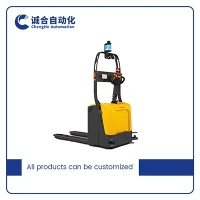
Vibration is an inevitable phenomenon in the operation of handling forklift AGVs. As a supplier of Handling Forklift AGVs, I've seen firsthand how vibration can have a significant impact on these automated machines. In this blog, I'll share my insights on what vibration means for the operation of a handling forklift AGV.
How Vibration Occurs in Handling Forklift AGVs
First off, let's talk about how vibration happens. There are a few key reasons. One major cause is the unevenness of the floor surface. When an AGV moves around a warehouse or a factory, it might encounter bumps, cracks, or rough patches on the floor. These irregularities cause the forklift to shake as its wheels roll over them.
Another source of vibration is the mechanical components of the AGV itself. The motor, transmission system, and hydraulic components can all generate vibrations during operation. For example, a motor with an unbalanced rotor can create a rhythmic vibration that spreads throughout the entire vehicle.
Load characteristics also play a role. If the load on the forklift is not properly secured or is unevenly distributed, it can lead to vibrations. A heavy and unstable load might shift during movement, causing the AGV to become unsteady and vibrate.
Impact on Mechanical Components
Vibration can take a toll on the mechanical parts of a handling forklift AGV. The constant shaking can accelerate wear and tear on bearings, gears, and joints. Bearings, which are crucial for smooth rotation, can experience increased friction due to vibration. Over time, this can lead to premature failure, requiring costly replacements.
Gears in the transmission system are also at risk. Vibration can cause the gears to misalign slightly, resulting in uneven tooth contact. This not only reduces the efficiency of power transmission but also increases the likelihood of gear damage. In severe cases, teeth can break off, rendering the transmission system inoperable.
The hydraulic system is another area affected by vibration. The hoses and fittings in the hydraulic system can loosen due to the constant shaking. This can lead to hydraulic fluid leaks, which not only waste resources but also reduce the performance of the lifting mechanism. If a leak goes undetected for a long time, it can cause damage to other components as well.
Impact on Navigation and Positioning
Accurate navigation and positioning are essential for the proper operation of a handling forklift AGV. Vibration can disrupt these functions in several ways. Many AGVs use sensors such as lasers, cameras, or RFID tags to navigate. Vibration can cause these sensors to move slightly out of position, leading to inaccurate readings.
For example, a laser scanner that is used to detect obstacles and map the environment might provide incorrect data if it is vibrating. This can result in the AGV making wrong decisions, such as avoiding non - existent obstacles or failing to detect real ones.
In terms of positioning, vibration can affect the accuracy of the AGV's odometry system. Odometry relies on the rotation of the wheels to calculate the vehicle's position. However, vibration can cause the wheels to slip or rotate irregularly, leading to errors in position estimation. This can be a major problem when the AGV needs to precisely pick up or drop off loads at specific locations.
Impact on Load Stability
Load stability is a critical aspect of handling forklift AGV operation. Vibration can significantly affect the stability of the load. As mentioned earlier, an unevenly distributed load can be more prone to shifting due to vibration. This not only increases the risk of the load falling off the forklift but also can cause damage to the load itself.
For example, if the AGV is carrying fragile goods, the vibration can cause the items to collide with each other or with the forklift's forks. This can lead to breakage and loss of product. In addition, a shifting load can change the center of gravity of the AGV, making it more likely to tip over, especially when turning or traveling at high speeds.

Mitigating the Impact of Vibration
As a Handling Forklift AGV supplier, we've come up with several strategies to mitigate the impact of vibration. First, we focus on improving the design of the AGV. We use high - quality components that are more resistant to vibration. For example, we select motors with well - balanced rotors and bearings with high - precision manufacturing.
We also pay attention to the suspension system. A good suspension can absorb and dampen vibrations, reducing their impact on the rest of the vehicle. Some of our AGVs are equipped with advanced suspension systems that can adjust to different floor conditions and load weights.
Proper maintenance is also crucial. Regular inspections can help detect and fix any issues related to vibration early on. For example, checking the tightness of bolts and nuts, inspecting the condition of hydraulic hoses, and ensuring proper load distribution can all contribute to reducing vibration.
Our Product Offerings
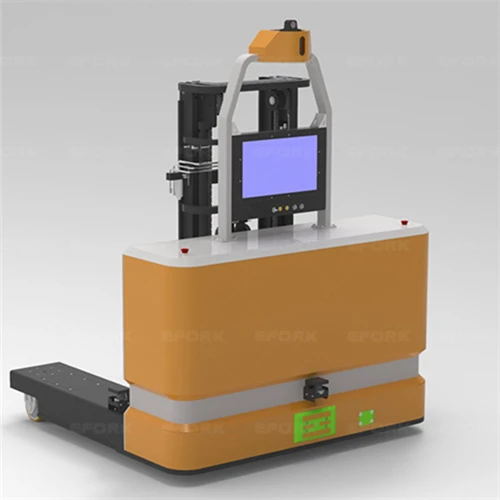
We offer a range of Handling Forklift AGVs to meet different customer needs. Our Counterbalanced Forklift AGV (2T) is designed for medium - sized loads and provides excellent stability. The heavy - duty Heavy - Duty AGV Forklift is suitable for handling large and heavy loads, with features that minimize vibration even under challenging conditions. And our Omni - directional Forklift AGV offers great maneuverability while maintaining load stability.
Conclusion
In conclusion, vibration can have a wide - ranging impact on the operation of a handling forklift AGV, affecting mechanical components, navigation, positioning, and load stability. However, with proper design, maintenance, and the use of advanced technologies, we can mitigate these effects. If you're in the market for a reliable handling forklift AGV, don't hesitate to reach out to us. We're here to help you find the best solution for your specific requirements and ensure smooth and efficient operations in your warehouse or factory.
References
- Some research papers on industrial vehicle dynamics and vibration analysis
- Manufacturer's manuals for AGV components such as motors, bearings, and hydraulic systems
- Industry reports on the performance and reliability of handling forklift AGVs