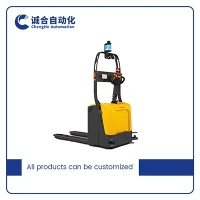
As a leading supplier of Composite AGVs, I'm often asked about the communication protocols that power these remarkable machines. In this blog, I'll delve into the technical details of the communication protocol used in our Composite AGVs, explaining how it enables seamless operation and integration in various industrial environments.
Understanding Composite AGVs
Before we explore the communication protocol, let's define what a Composite AGV is. A Composite AGV, or Automated Guided Vehicle, is a type of intelligent mobile robot designed to transport goods and materials within a manufacturing or distribution facility without the need for human intervention. These vehicles are equipped with advanced sensors, navigation systems, and control units that allow them to move autonomously along predefined paths or in response to real-time commands.
Our Composite Mobile Robot is a prime example of such a vehicle. It combines high-performance materials and cutting-edge technology to provide a reliable and efficient solution for material handling tasks. With its modular design and customizable features, our Composite AGV can be tailored to meet the specific needs of different industries, including automotive, electronics, food and beverage, and logistics.
The Role of Communication Protocols in AGVs
Communication protocols play a crucial role in the operation of AGVs. They enable the exchange of information between the AGV and other components of the material handling system, such as controllers, sensors, and other AGVs. This information includes commands for movement, status updates, and safety alerts, ensuring that the AGV can navigate safely and efficiently through the facility.
In a Composite AGV, the communication protocol must be robust, reliable, and capable of handling large volumes of data in real-time. It also needs to be flexible enough to support different types of communication interfaces, such as Wi-Fi, Ethernet, and Bluetooth, to accommodate various networking environments.
The Communication Protocol of Our Composite AGVs
Our Composite AGVs use a proprietary communication protocol that has been specifically developed to meet the unique requirements of industrial automation. This protocol is based on a combination of standard communication technologies and custom algorithms, ensuring high performance, security, and compatibility.
Wireless Communication
One of the key features of our communication protocol is its support for wireless communication. Our Composite AGVs can communicate with the central control system and other devices using Wi-Fi or Bluetooth, allowing for flexible and scalable deployment in large facilities. This wireless connectivity enables real-time data transfer and remote monitoring, making it easier to manage and optimize the operation of the AGV fleet.
Ethernet Communication
In addition to wireless communication, our Composite AGVs also support Ethernet communication. Ethernet provides a high-speed, reliable, and secure communication channel for transferring large amounts of data between the AGV and the control system. This is particularly useful for applications that require high-resolution sensor data or real-time video streaming.
Customizable Communication Interfaces
Our communication protocol is designed to be flexible and customizable, allowing us to integrate our Composite AGVs with a wide range of third-party devices and systems. We support various communication interfaces, such as Modbus, Profibus, and CANopen, making it easy to connect our AGVs to existing industrial automation systems.


Real-Time Data Processing
Another important aspect of our communication protocol is its ability to process data in real-time. Our Composite AGVs are equipped with powerful onboard computers that can analyze sensor data and make decisions quickly, ensuring smooth and efficient operation. This real-time data processing also enables the AGV to respond to changes in the environment or unexpected events, such as obstacles or collisions.
Benefits of Our Communication Protocol
The use of our proprietary communication protocol offers several benefits for our customers:
- Enhanced Efficiency: By enabling real-time communication and data processing, our communication protocol helps to optimize the operation of the AGV fleet, reducing downtime and increasing productivity.
- Improved Safety: The ability to exchange safety-related information between the AGV and other devices in real-time enhances the safety of the material handling system, reducing the risk of accidents and injuries.
- Scalability: Our communication protocol is designed to support the integration of multiple AGVs and other devices, allowing for easy scalability as the needs of the facility grow.
- Compatibility: With its support for various communication interfaces and standards, our communication protocol ensures compatibility with existing industrial automation systems, making it easier to integrate our Composite AGVs into the customer's infrastructure.
Customized Solutions
At our company, we understand that every customer has unique requirements. That's why we offer Customized Heavy duty Automated Guided Cart and Customized Explosion-proof Automated Guided Cart solutions to meet the specific needs of different industries. Our team of experts can work closely with you to design and develop a communication protocol that is tailored to your application, ensuring optimal performance and reliability.
Contact Us for Procurement
If you're interested in learning more about our Composite AGVs and their communication protocols, or if you'd like to discuss a specific procurement project, please contact us. Our sales team will be happy to provide you with detailed information and help you find the best solution for your needs.