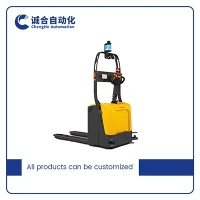
In the contemporary business landscape, the demand for efficient and adaptable logistics solutions has never been more pressing. As a leading provider of Smart Logistics Systems, I've witnessed firsthand the transformative power of these technologies in streamlining operations and driving business growth. One of the most critical aspects of a Smart Logistics System is its scalability – the ability to grow and adapt to changing business needs, market conditions, and technological advancements. In this blog post, I'll explore the key scalability features of a Smart Logistics System and how they can benefit your organization.
Modular Design
A modular design is the foundation of scalability in a Smart Logistics System. Instead of a monolithic, one - size - fits - all solution, a modular system is composed of individual components or modules that can be easily added, removed, or modified as needed. This allows businesses to start with a basic system and gradually expand it as their operations grow.
For example, our Smart Logistics System includes modules for inventory management, order processing, and transportation planning. A small - scale business might initially implement only the inventory management module to keep track of stock levels. As the business expands and starts receiving more orders, the order processing module can be added to streamline the fulfillment process. Later, when the company begins to manage its own transportation fleet, the transportation planning module can be integrated.
This modular approach not only provides flexibility but also reduces the initial investment required. Businesses can allocate their resources more effectively by focusing on the modules that are most relevant to their current needs.
Cloud - Based Infrastructure
Cloud - based technology has revolutionized the scalability of logistics systems. By hosting the Smart Logistics System on the cloud, businesses can easily scale their computing resources up or down based on demand. This is particularly beneficial for companies with seasonal or fluctuating business volumes.
During peak seasons, such as holidays or promotional events, a business may experience a significant increase in orders. With a cloud - based Smart Logistics System, additional computing power can be quickly provisioned to handle the surge in data processing and transaction volumes. Conversely, during off - peak periods, the resources can be scaled back to reduce costs.
Moreover, cloud - based systems offer seamless integration with other cloud - based services. For instance, our Smart Logistics System can be integrated with a IO Integrated System, which combines various data sources and sensors to provide real - time insights into the logistics operations. This integration enhances the overall functionality of the system without the need for complex on - premise infrastructure.
Integration Capabilities
A scalable Smart Logistics System should be able to integrate with a wide range of external systems and technologies. This includes enterprise resource planning (ERP) systems, customer relationship management (CRM) systems, and third - party logistics providers (3PLs).
Integration with an ERP system allows for seamless data flow between the logistics operations and other business functions, such as finance and procurement. For example, when an order is processed in the Smart Logistics System, the relevant financial data can be automatically updated in the ERP system, eliminating the need for manual data entry and reducing the risk of errors.
Our Smart Logistics System also supports integration with a Manufacturing Execution System (MES). This integration enables real - time synchronization of production and logistics data, ensuring that the right products are delivered to the right place at the right time.
In addition, integration with 3PLs is crucial for businesses that outsource some of their logistics functions. By integrating with 3PLs' systems, the Smart Logistics System can provide end - to - end visibility into the supply chain, allowing businesses to track shipments, manage inventory, and collaborate more effectively with their partners.
Data Analytics and Machine Learning
Data analytics and machine learning are essential scalability features of a Smart Logistics System. These technologies enable businesses to analyze large volumes of data generated by the logistics operations and make data - driven decisions.
With data analytics, businesses can identify trends, patterns, and inefficiencies in their logistics processes. For example, by analyzing historical order data, a company can predict future demand more accurately and adjust its inventory levels accordingly. This helps to reduce inventory holding costs and improve customer satisfaction.
Machine learning algorithms can be used to optimize various aspects of the logistics operations, such as route planning and warehouse layout. These algorithms can learn from past data and continuously improve their performance over time. For instance, a machine - learning - based route planning algorithm can take into account factors such as traffic conditions, delivery times, and vehicle capacity to find the most efficient routes for deliveries.

Our Smart Logistics System incorporates advanced data analytics and machine learning capabilities, providing businesses with actionable insights and automated decision - making tools. This not only improves the efficiency of the logistics operations but also enables the system to adapt to changing conditions and scale with the business.
Mobile and Remote Access
In today's digital age, mobile and remote access is a must - have feature for a scalable Smart Logistics System. With mobile devices, logistics managers and employees can access the system from anywhere, at any time. This allows for real - time monitoring and management of the logistics operations, even when they are on the go.
For example, a warehouse manager can use a mobile app to check inventory levels, assign tasks to employees, and track the progress of orders. A delivery driver can use a mobile device to receive delivery instructions, scan barcodes, and update the status of shipments.
Remote access also enables businesses to collaborate more effectively with their partners and suppliers. For instance, suppliers can access the Smart Logistics System remotely to view inventory levels and plan their production schedules accordingly.
Our Smart Logistics System offers a user - friendly mobile app and web - based interface, providing seamless access to the system from any device with an internet connection. This enhances the flexibility and scalability of the system, allowing businesses to manage their logistics operations more efficiently.
Automatic Software Updates
To ensure that the Smart Logistics System remains up - to - date and scalable, automatic software updates are essential. These updates not only fix bugs and security vulnerabilities but also introduce new features and improvements.
With automatic software updates, businesses don't have to worry about manually installing the latest version of the system. The updates are applied in the background, minimizing disruptions to the logistics operations. This ensures that the system is always running at its best and can adapt to new business requirements and technological advancements.
Our Smart Logistics System is designed to receive automatic software updates, providing our customers with the latest features and enhancements without any additional effort on their part.
Scalability in Human Resources
A scalable Smart Logistics System also takes into account the scalability of human resources. The system should be easy to use and require minimal training for new employees. This allows businesses to quickly onboard new staff as the operations grow.
Our Smart Logistics System has an intuitive user interface and provides comprehensive training materials and support. This ensures that employees can quickly learn how to use the system and contribute to the logistics operations effectively.
In addition, the system can be configured to support different levels of user access and permissions. This allows businesses to manage their workforce more efficiently and ensure that sensitive information is protected.
Conclusion
In conclusion, the scalability features of a Smart Logistics System are crucial for businesses looking to stay competitive in today's dynamic market. A modular design, cloud - based infrastructure, integration capabilities, data analytics and machine learning, mobile and remote access, automatic software updates, and scalability in human resources all contribute to the system's ability to grow and adapt to changing business needs.

As a provider of Smart Logistics Systems, we are committed to delivering solutions that are not only scalable but also reliable and easy to use. If you're interested in learning more about how our Smart Logistics System can help your business scale and improve its logistics operations, we encourage you to reach out to us for a procurement consultation. Our team of experts will be happy to discuss your specific requirements and provide you with a customized solution.
References
- Christopher, M. (2016). Logistics & Supply Chain Management. Pearson.
- Ballou, R. H. (2019). Business Logistics/Supply Chain Management. Cengage Learning.
- Lee, H. L. (2004). The triple - A supply chain. Harvard Business Review.