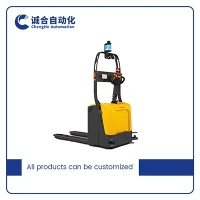
Hey there! As a supplier of Customized AGVs (Automated Guided Vehicles), I've had my fair share of clients asking about the environmental requirements for these nifty machines to work. AGVs are pretty cool, as they can be tailored to fit specific needs, whether it's for material handling in a warehouse, moving goods in a factory, or even assisting in complex manufacturing processes. So, let's dive into what kind of environments are suitable for these Customized AGVs.
Temperature and Humidity
First off, temperature and humidity play a huge role. AGVs, like any other electronic and mechanical equipment, have an ideal temperature range in which they operate best. Generally, most AGVs can work well in an environment where the temperature is between 0°C and 40°C. If it gets too cold, the batteries might not perform as well, and the lubricants in the moving parts could thicken, causing more friction and potentially reducing the lifespan of the components. On the other hand, if it's too hot, the electronics can overheat, leading to malfunctions or even permanent damage.
Humidity is also a factor. High humidity can cause corrosion on metal parts, especially if the AGV has exposed wires or connectors. A relative humidity of around 30% - 80% is usually considered safe. If the humidity is consistently outside this range, special precautions need to be taken. For example, in a very humid environment, you might need to install dehumidifiers or use moisture-resistant coatings on the AGV's components.
Floor Conditions
The floor where the AGV operates is crucial. It needs to be flat and smooth. Uneven floors can cause the AGV to wobble, which not only affects its movement accuracy but can also put extra stress on the wheels and suspension system. Cracks, bumps, or potholes can even derail the AGV or cause it to get stuck.
The floor material also matters. AGVs work best on hard, non - slippery surfaces like concrete or epoxy floors. Soft or uneven surfaces like gravel or grass are generally not suitable, as they can make it difficult for the AGV to move smoothly and accurately. Some AGVs are designed to handle slightly rougher terrains, but for most standard models, a smooth, hard floor is a must.
Lighting Conditions
Lighting is important, especially for AGVs that use vision - based navigation systems. These systems rely on cameras or sensors to detect markers or obstacles in the environment. Inadequate lighting can make it difficult for these sensors to function properly, leading to errors in navigation or obstacle detection.
Even for AGVs that use other navigation methods like magnetic tape or laser guidance, proper lighting is still beneficial. It helps operators to monitor the AGV's movement and ensures a safer working environment. A well - lit area with an illuminance of at least 100 lux is usually recommended.
Obstacle and Traffic Management
The working environment should be free of unnecessary obstacles. AGVs are programmed to follow a specific path, and any unexpected obstacles can cause them to stop or deviate from their route. This can disrupt the workflow and potentially cause damage to the AGV or the goods it's carrying.
In addition, traffic management is crucial, especially in areas where multiple AGVs are operating. There should be clear lanes and rules for the AGVs to follow. Collision avoidance systems are usually installed on AGVs, but a well - organized traffic flow can further reduce the risk of accidents.
Dust and Chemical Exposure
Dusty environments can be a problem for AGVs. Dust can accumulate on the sensors, motors, and other components, affecting their performance. It can also clog air filters and cooling systems, leading to overheating. In areas with high dust levels, proper ventilation and dust - control measures should be in place.
Chemical exposure is another concern. Some chemicals can corrode the AGV's components or damage the sensors. If the AGV is going to be used in an environment where it might be exposed to chemicals, it needs to be specially designed with chemical - resistant materials.
Specific AGV Types and Their Environmental Requirements
Let's take a look at some specific types of Customized AGVs and their unique environmental requirements.
The Customized Counterbalanced Forklift AGV is often used in warehouses for lifting and moving heavy loads. It requires a relatively large and open space to operate. The floor needs to be able to support the weight of the AGV and the load it's carrying. In addition, since it has a fork mechanism, it needs to have enough clearance above and around it to lift and lower the loads safely.
The Scissor Lift Platform AGV is designed for tasks that require vertical movement, such as maintenance work at height. It needs a stable floor to support the scissor lift mechanism. The working area should also have enough vertical clearance to allow the lift to extend fully.
The Composite AGV With Robotic Arm is a more complex AGV that combines the functions of an AGV and a robotic arm. It requires a precise and controlled environment. The robotic arm needs to operate in a space where there are no obstacles that could interfere with its movement. The environmental conditions, such as temperature and humidity, also need to be carefully controlled to ensure the proper functioning of the robotic arm's delicate components.
Why Choose Our Customized AGVs
At our company, we understand the importance of these environmental requirements. That's why we offer highly customizable AGVs that can be tailored to fit different working environments. Whether you have a cold storage facility, a dusty factory, or a well - lit warehouse, we can design an AGV that meets your specific needs.
Our AGVs are built with high - quality components that are resistant to temperature, humidity, and dust. We also use the latest navigation and collision avoidance technologies to ensure safe and efficient operation in any environment.


If you're in the market for a Customized AGV, don't hesitate to contact us. We can work with you to understand your requirements and design an AGV that's perfect for your working environment. Our team of experts is always ready to provide you with the best solutions and support. Let's work together to improve your workflow and productivity with our top - notch Customized AGVs!
References
- "Automated Guided Vehicle Systems: Technology, Design, and Applications" by John T. Black
- "Industrial Automation: A Practical Approach" by David A. Houtman