


Hey there! As a supplier of Counterweight Forklift AGVs, I've seen firsthand the growing interest in these nifty machines and how they stack up against traditional forklifts. So, let's dive right in and explore the key differences between a Counterweight Forklift AGV and a conventional forklift.
1. Automation: The Game - Changer
The most obvious difference between a Counterweight Forklift AGV and a traditional forklift is automation. Traditional forklifts require an operator to drive, load, and unload goods. This means you have to hire trained personnel, and there's always the human factor involved - fatigue, distractions, and the potential for human error.
On the other hand, a Counterweight Forklift AGV is an automated machine. It can operate without a human driver, following pre - programmed routes and performing tasks with high precision. For example, our Automated Counterbalanced Forklift can be set up to move pallets from one location to another in a warehouse, all on its own. This not only reduces labor costs but also improves efficiency as AGVs can work around the clock without breaks.
2. Safety Features
Safety is a top priority in any warehouse or industrial setting. Traditional forklifts rely on the operator's skills and awareness to avoid accidents. Even the most experienced operators can make mistakes, especially when they're tired or under pressure.
Counterweight Forklift AGVs come equipped with advanced safety features. They use sensors such as lasers, cameras, and ultrasonic sensors to detect obstacles in their path. If an AGV senses an object in its way, it will automatically stop or change its route to avoid a collision. This significantly reduces the risk of accidents in the workplace. For instance, our AGVs are designed to operate safely in busy environments, even when there are pedestrians around.
3. Precision and Accuracy
When it comes to precision, Counterweight Forklift AGVs have a clear edge over traditional forklifts. Traditional forklifts are operated by humans, and while they can be quite accurate, there's always a margin of error. Factors like operator skill, visibility, and the condition of the forklift can affect the accuracy of loading and unloading operations.

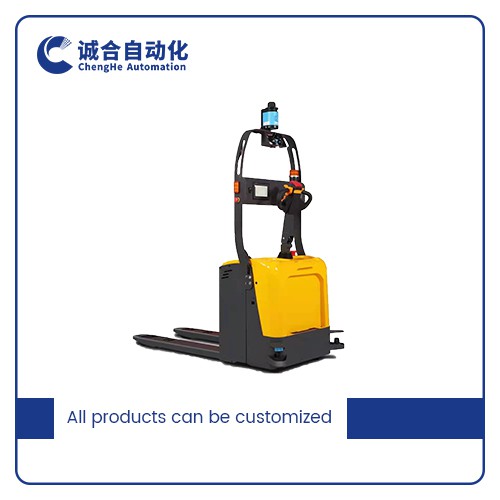
AGVs, however, are programmed to perform tasks with extreme precision. They can pick up and place pallets at exact locations, every time. This is crucial in warehouses where space is limited, and goods need to be stored in an organized manner. Our Automated AGV Pallet Stacker can stack pallets at specific heights and positions with millimeter - level accuracy.
4. Flexibility and Adaptability
Traditional forklifts are relatively flexible in terms of where they can operate. An experienced operator can drive a forklift through different areas of a warehouse, navigate around obstacles, and handle various types of loads.
Counterweight Forklift AGVs, on the other hand, are more adaptable in a different way. They can be easily reprogrammed to change their routes or perform new tasks. If there's a change in the warehouse layout or a new product line that requires different handling, an AGV can be quickly adjusted to meet the new requirements. This makes them a great choice for warehouses that need to be agile and responsive to changing business needs.
5. Cost - Effectiveness
In the short term, traditional forklifts may seem like a more cost - effective option. The upfront cost of purchasing a traditional forklift is generally lower than that of a Counterweight Forklift AGV. However, when you consider the long - term costs, AGVs often come out on top.
Traditional forklifts require ongoing labor costs, including wages, training, and benefits for operators. There are also maintenance costs, as the wear and tear on a forklift driven by a human can be significant. AGVs, once installed, have lower labor costs since they don't need operators. They also tend to have lower maintenance requirements because they operate in a more controlled and consistent manner.
6. Data Collection and Analysis
Counterweight Forklift AGVs are often connected to a central management system, which allows for data collection and analysis. This system can track the AGV's movements, the time it takes to complete tasks, and other important metrics. Warehouse managers can use this data to optimize operations, identify bottlenecks, and improve overall efficiency.
Traditional forklifts don't offer this level of data collection and analysis. While some modern forklifts may have basic monitoring systems, they can't provide the same depth of information as an AGV system. This data - driven approach gives AGV - equipped warehouses a competitive advantage in today's data - centric business environment.
7. Environmental Impact
In an era where environmental sustainability is becoming increasingly important, Counterweight Forklift AGVs have an edge. Most AGVs are electrically powered, which means they produce zero emissions during operation. This is in contrast to many traditional forklifts, which are powered by diesel or propane, both of which release harmful pollutants into the environment.
Using AGVs can help companies reduce their carbon footprint and meet environmental regulations. It also creates a healthier and more pleasant working environment for warehouse employees.
8. Integration with Other Systems
AGVs can be easily integrated with other warehouse systems, such as inventory management systems and conveyor belts. This seamless integration allows for a more streamlined and efficient warehouse operation. For example, an AGV can be programmed to pick up a pallet from a conveyor belt and transport it to a specific storage location, all while updating the inventory system in real - time.
Traditional forklifts are more difficult to integrate with other systems. They operate more independently, and coordinating their movements with other warehouse equipment often requires a lot of manual effort.
Conclusion
As you can see, there are many differences between a Counterweight Forklift AGV and a traditional forklift. While traditional forklifts still have their place in some warehouses, the advantages of AGVs in terms of automation, safety, precision, and cost - effectiveness are hard to ignore.
If you're in the market for a new forklift solution, I encourage you to consider a Counterweight Forklift AGV. Whether you need an Automated Counterbalanced Forklift, an Automated AGV Pallet Stacker, or an AGV Pallet Truck, we have the right product for your needs. Feel free to reach out to us to discuss your requirements and see how our AGV solutions can transform your warehouse operations.
References
- Warehouse Automation Handbook
- Industrial Forklift Operations Guide
- AGV Technology and Applications Research Report


