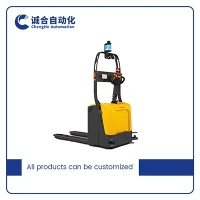
As a supplier of Customized Automated Guided Vehicles (AGVs), I've witnessed firsthand the transformative power of these machines in various industries. One of the most crucial aspects of AGVs, often overlooked, is their data - logging capabilities. In this blog, I'll delve into what these capabilities are, why they matter, and how they can be optimized for different applications.
Understanding Data - Logging in Customized AGVs
Data - logging in AGVs refers to the process of collecting, storing, and analyzing data generated by the vehicle during its operation. This data can come from a variety of sources, including sensors, motors, and navigation systems. For instance, sensors can detect obstacles, measure distances, and monitor environmental conditions. Motors generate data about their speed, torque, and power consumption. Navigation systems record the AGV's position, route, and movement patterns.
The data - logging process starts with the sensors and other components on the AGV. These devices continuously gather data and send it to the on - board computer. The computer then processes the data, filters out any noise or irrelevant information, and stores it in a local database. This local storage can be in the form of a hard drive, solid - state drive, or other types of memory.
Types of Data Logged by Customized AGVs
1. Operational Data
Operational data includes information about the AGV's movement, such as its speed, acceleration, and deceleration. This data is crucial for understanding how the AGV is performing and for optimizing its operation. For example, if an AGV is consistently accelerating too quickly or decelerating too slowly, it could lead to increased wear and tear on the vehicle's components and a decrease in overall efficiency.
2. Environmental Data
AGVs are often used in a variety of environments, from warehouses to manufacturing plants. Environmental data, such as temperature, humidity, and air quality, can affect the performance and lifespan of the AGV. By logging this data, operators can take proactive measures to protect the AGV from adverse environmental conditions. For instance, if the temperature in a warehouse exceeds a certain threshold, the AGV can be programmed to slow down or stop to prevent overheating.
3. Maintenance Data
Maintenance data includes information about the AGV's components, such as the motor, battery, and sensors. By monitoring the performance of these components, operators can predict when maintenance is required and schedule it in advance. This can help to prevent breakdowns and reduce downtime. For example, if the battery's charge level is dropping faster than normal, it could indicate a problem with the battery or the charging system.
4. Safety Data
Safety is a top priority in any industrial setting. AGVs are equipped with a variety of safety features, such as collision sensors and emergency stop buttons. Safety data logged by these features can be used to identify potential safety hazards and take corrective action. For example, if an AGV frequently encounters collisions in a particular area, it could indicate a problem with the layout of the facility or the navigation system.
Importance of Data - Logging in Customized AGVs
1. Performance Optimization
By analyzing the data logged by AGVs, operators can identify areas where the vehicle's performance can be improved. For example, they can adjust the AGV's speed and acceleration settings to reduce energy consumption and increase efficiency. They can also optimize the AGV's route to minimize travel time and improve productivity.
2. Predictive Maintenance
Data - logging enables predictive maintenance, which can save time and money. Instead of performing maintenance on a fixed schedule, operators can use the data to determine when maintenance is actually needed. This can help to prevent unnecessary maintenance and reduce the risk of breakdowns.
3. Safety Enhancement
Safety data logged by AGVs can be used to improve safety in the workplace. By analyzing the data, operators can identify potential safety hazards and take steps to eliminate them. For example, they can install additional safety barriers or adjust the AGV's operating procedures to reduce the risk of collisions.


4. Regulatory Compliance
In some industries, there are strict regulations regarding the operation of AGVs. Data - logging can help companies to comply with these regulations by providing a record of the AGV's operation. For example, the data can be used to demonstrate that the AGV is operating within the specified speed limits and safety standards.
Our Customized AGV Data - Logging Solutions
At our company, we offer a range of customized AGVs with advanced data - logging capabilities. Our Customized Explosion - proof Automated Guided Cart is designed for use in hazardous environments and is equipped with sensors to log data about the vehicle's operation and the surrounding environment. This data can be used to ensure the safety of the operators and the integrity of the facility.
Our Scissor Lift AGV is another example of our customized AGVs with powerful data - logging features. The scissor lift mechanism is monitored closely, and data about its movement, load capacity, and safety features are logged. This helps to ensure the proper operation of the lift and the safety of the personnel working with it.
We also provide Customized AGV Service to help our customers make the most of their AGV's data - logging capabilities. Our team of experts can assist with data analysis, performance optimization, and predictive maintenance.
Optimizing Data - Logging for Customized AGVs
To optimize the data - logging capabilities of customized AGVs, several factors need to be considered.
1. Sensor Selection
The choice of sensors is crucial for accurate data - logging. Different sensors are suitable for different types of data. For example, ultrasonic sensors are good for detecting obstacles, while temperature sensors are used for monitoring environmental conditions. It's important to select sensors that are reliable, accurate, and compatible with the AGV's system.
2. Data Storage and Management
Once the data is collected, it needs to be stored and managed effectively. This includes choosing the right storage medium, such as a cloud - based storage system or an on - board hard drive. It also involves implementing a data management system that can organize, analyze, and present the data in a meaningful way.
3. Data Analysis Tools
To make sense of the logged data, powerful data analysis tools are required. These tools can help to identify trends, patterns, and anomalies in the data. They can also be used to generate reports and visualizations that can assist operators in making informed decisions.
Conclusion
The data - logging capabilities of customized AGVs are a valuable asset for industries that rely on these vehicles. By collecting, storing, and analyzing data, operators can optimize the performance of the AGVs, enhance safety, and ensure regulatory compliance. At our company, we are committed to providing high - quality customized AGVs with advanced data - logging features and comprehensive services to help our customers make the most of these capabilities.
If you're interested in learning more about our customized AGVs and their data - logging capabilities, or if you're considering a purchase, we encourage you to reach out to us for a detailed discussion. Our team of experts is ready to assist you in finding the best AGV solution for your specific needs.
References
- Industrial Automation Handbook, Third Edition, Edited by David A. Houtman
- Automated Guided Vehicle Systems: Design, Control, and Deployment, by Thomas A. Urbanic