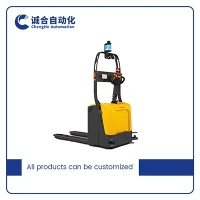
As a provider of explosion-proof Automated Guided Vehicles (AGVs), I understand the significance of energy consumption optimization in these specialized machines. Explosion-proof AGVs are designed to operate in hazardous environments where flammable gases, vapors, or dusts are present. These environments demand high safety standards and efficient operation, and energy consumption optimization plays a crucial role in achieving both.
Understanding the Energy Consumption of Explosion - proof AGVs
Before delving into optimization strategies, it's essential to understand the factors contributing to the energy consumption of explosion - proof AGVs. The primary energy consumers in an AGV include the drive system, which propels the vehicle forward and backward, steers it, and controls its speed; the lifting mechanism, if the AGV is equipped with one for material handling; and the onboard control system, which manages the AGV's navigation, communication, and safety functions.
The drive system typically accounts for the largest portion of energy consumption. Electric motors in the drive system convert electrical energy into mechanical energy to move the AGV. The efficiency of these motors, the load they carry, and the driving profile (such as acceleration, deceleration, and constant - speed operation) all affect energy usage. For example, frequent starts and stops, which require high - power acceleration, consume more energy compared to continuous, steady - state operation.
The lifting mechanism, if present, also consumes a significant amount of energy. Lifting heavy loads requires powerful motors to overcome gravity, and the height and frequency of lifting operations impact energy consumption. The control system, although it consumes relatively less energy compared to the drive and lifting systems, is always operational and contributes to the overall energy budget.
Optimization Strategies
1. Motor and Drive System Optimization
- High - Efficiency Motors: One of the most effective ways to reduce energy consumption is to use high - efficiency electric motors. Permanent magnet synchronous motors (PMSMs) are a popular choice for explosion - proof AGVs. These motors offer higher efficiency, better power density, and lower heat generation compared to traditional induction motors. By using PMSMs, we can reduce the amount of electrical energy required to achieve the same level of performance.
- Regenerative Braking: Implementing regenerative braking systems in the drive system can significantly recover energy. When the AGV decelerates or brakes, the electric motors act as generators, converting the kinetic energy of the moving vehicle back into electrical energy. This recovered energy can then be stored in the AGV's battery or fed back into the power grid, reducing the overall energy consumption of the vehicle.
- Optimal Driving Profiles: By programming the AGV's control system to follow optimal driving profiles, we can minimize energy consumption. This involves avoiding unnecessary acceleration and deceleration, maintaining a steady speed whenever possible, and using smooth turning maneuvers. For example, instead of sudden stops and starts, the AGV can be programmed to gradually slow down and speed up, reducing the peak power demand on the drive system.
2. Battery Management
- Selecting the Right Battery: The choice of battery has a significant impact on the energy efficiency of an explosion - proof AGV. Lithium - ion batteries are becoming increasingly popular due to their high energy density, long cycle life, and low self - discharge rate. Compared to traditional lead - acid batteries, lithium - ion batteries can store more energy in a smaller and lighter package, reducing the overall weight of the AGV and improving its energy efficiency.
- Battery Charging Optimization: Optimizing the battery charging process is also crucial. Smart charging systems can monitor the battery's state of charge, temperature, and voltage and adjust the charging current accordingly. This helps to prevent overcharging and undercharging, which can reduce the battery's lifespan and efficiency. Additionally, fast - charging technologies can minimize the downtime of the AGV, allowing it to be back in operation more quickly.
- Battery Recycling and Reuse: At the end of their useful life, batteries should be properly recycled or reused. Recycling can recover valuable materials such as lithium, cobalt, and nickel, reducing the environmental impact and the cost of battery replacement. Reusing batteries in less demanding applications, such as stationary energy storage, can also extend their useful life and reduce waste.
3. Load Management
- Load Scheduling: Proper load scheduling can help to optimize the energy consumption of explosion - proof AGVs. By grouping similar tasks together and scheduling them in an efficient sequence, we can reduce the number of empty runs and unnecessary movements of the AGV. For example, if multiple loads need to be transported to the same area, the AGV can be programmed to pick up all the loads at once and deliver them in one trip, rather than making multiple trips.
- Load Weight Optimization: Minimizing the weight of the loads carried by the AGV can also reduce energy consumption. This can be achieved by using lighter materials for packaging or by optimizing the design of the products being transported. Additionally, the AGV's lifting mechanism can be designed to handle only the necessary load capacity, avoiding over - sizing and unnecessary energy consumption.
4. System Design and Integration
- Lightweight Design: Reducing the weight of the AGV itself can significantly improve its energy efficiency. By using lightweight materials such as aluminum alloys and composite materials in the AGV's frame and body, we can reduce the amount of energy required to move the vehicle. Additionally, the design of the AGV should be optimized to minimize the use of unnecessary components and reduce the overall complexity of the system.
- Energy - Efficient Control Systems: The AGV's control system plays a crucial role in energy management. Advanced control algorithms can be used to optimize the operation of the drive system, lifting mechanism, and other components based on real - time conditions. For example, the control system can adjust the speed and power of the motors according to the load, terrain, and traffic conditions, ensuring that the AGV operates at the most energy - efficient level.
- Integration with Other Systems: Integrating the explosion - proof AGV with other systems in the production or warehouse environment can also lead to energy savings. For example, the AGV can communicate with the building's lighting and ventilation systems to adjust their operation based on the AGV's movement. When the AGV is not in a particular area, the lighting and ventilation can be dimmed or turned off, reducing energy consumption.
Monitoring and Evaluation
To ensure the effectiveness of energy consumption optimization measures, it is essential to monitor and evaluate the energy usage of explosion - proof AGVs regularly. This can be done by installing energy meters on the AGV to measure the electrical energy consumption of the drive system, lifting mechanism, and control system. Additionally, data logging and analysis software can be used to collect and analyze energy consumption data over time, identifying trends and areas for improvement.
By comparing the energy consumption data before and after implementing optimization measures, we can determine the effectiveness of the strategies and make necessary adjustments. Continuous monitoring and evaluation also allow us to detect any abnormal energy consumption patterns, which may indicate a problem with the AGV's components or operation.
Conclusion
Optimizing the energy consumption of explosion - proof AGVs is a complex but achievable goal. By implementing strategies such as motor and drive system optimization, battery management, load management, and system design and integration, we can significantly reduce the energy consumption of these specialized vehicles. This not only helps to lower operating costs but also improves the sustainability and environmental performance of the production or warehouse facilities where they are used.
As a leading provider of explosion - proof AGVs, we are committed to helping our customers achieve energy efficiency in their operations. Our team of experts can work with you to design and implement customized energy optimization solutions based on your specific requirements and operational environment. If you are interested in learning more about how our explosion - proof AGVs can help you optimize energy consumption and improve your productivity, please contact us for a detailed consultation. We look forward to discussing your needs and finding the best solutions for your business.
References
- Chen, J., & Zhang, Y. (2019). Energy - efficient control strategies for automated guided vehicles in intelligent manufacturing systems. Journal of Manufacturing Systems, 51, 146 - 156.
- Wang, H., & Li, S. (2020). A review of energy - saving technologies for electric vehicles: From vehicle system perspective. Renewable and Sustainable Energy Reviews, 120, 109668.
- European Commission. (2018). Directive 2014/34/EU of the European Parliament and of the Council of 26 February 2014 on the harmonization of the laws of the Member States relating to equipment and protective systems intended for use in potentially explosive atmospheres. Official Journal of the European Union, L90, 1 - 41.