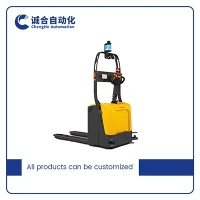
As a Roller AGV supplier, ensuring the safety of operators around these automated vehicles is of paramount importance. Roller AGVs are widely used in various industries for material handling and transportation, and their operation in close proximity to human operators requires strict safety measures. In this blog, I will share some key strategies and practices to ensure the safety of operators around Roller AGVs.
1. Comprehensive Training Programs
One of the most fundamental steps in ensuring operator safety is to provide comprehensive training programs. Operators should be well - versed in the operation, functionality, and safety features of Roller AGVs. The training should cover topics such as:
- Basic Operation: Teach operators how to start, stop, and control the Roller AGV. They should understand the different control interfaces, including remote controls and onboard control panels.
- Safety Features: Familiarize operators with the safety features of the Roller AGV, such as emergency stop buttons, collision sensors, and warning lights. Explain how these features work and when to use them.
- Path Planning and Navigation: Educate operators on how Roller AGVs navigate through the facility. This includes understanding the mapping system, waypoints, and potential obstacles in the AGV's path.
By providing in - depth training, operators will be more confident and competent in working around Roller AGVs, reducing the risk of accidents.
2. Installation of Safety Sensors
Roller AGVs should be equipped with advanced safety sensors to detect the presence of operators and other obstacles in their path. Some common types of safety sensors include:
- Laser Scanners: These sensors can detect objects in a wide range of angles and distances. They continuously scan the area around the AGV and can trigger an immediate stop if an object is detected within a predefined safety zone.
- Ultrasonic Sensors: Ultrasonic sensors use sound waves to detect the presence of objects. They are particularly useful for detecting objects at close range and can provide an additional layer of safety.
- Proximity Sensors: Proximity sensors can detect the presence of operators or objects when they come too close to the AGV. These sensors can be used to slow down or stop the AGV to prevent collisions.
As a supplier, we ensure that all our Roller AGVs are equipped with high - quality safety sensors to provide maximum protection for operators.
3. Clear Marking and Signage
Clear marking and signage in the area where Roller AGVs operate are essential for operator safety. This includes:
- AGV Path Markings: Clearly mark the paths that Roller AGVs are allowed to travel on. This helps operators to stay out of the AGV's path and reduces the risk of collisions.
- Safety Zones: Mark safety zones around the AGVs, such as no - entry zones during operation. These zones should be clearly visible and well - defined.
- Warning Signage: Place warning signs in areas where AGVs are operating. These signs should indicate the presence of AGVs, potential hazards, and safety instructions.
By having clear markings and signage, operators can easily identify the safe areas and avoid dangerous situations.
4. Regular Maintenance and Inspections
Regular maintenance and inspections of Roller AGVs are crucial to ensure their safe operation. This includes:
- Mechanical Inspections: Check the mechanical components of the AGV, such as the rollers, wheels, and drive systems. Ensure that all components are in good working condition and free from wear and tear.
- Electrical Inspections: Inspect the electrical systems of the AGV, including the battery, wiring, and control systems. Faulty electrical components can pose a significant safety risk.
- Safety Feature Checks: Regularly test the safety features of the AGV, such as the emergency stop buttons, sensors, and warning lights. Make sure that these features are functioning properly at all times.
As a supplier, we offer maintenance services and support to ensure that our Roller AGVs are always in optimal condition.
5. Integration of Safety Software
In addition to hardware safety features, safety software can play a vital role in ensuring operator safety. Safety software can be used to:
- Monitor AGV Operation: Continuously monitor the operation of the Roller AGV, including its speed, direction, and position. If any abnormal behavior is detected, the software can trigger an alarm or stop the AGV.
- Manage Traffic Flow: Coordinate the movement of multiple Roller AGVs in the facility to avoid collisions and congestion. The software can assign priority to different AGVs and adjust their paths accordingly.
- Generate Safety Reports: Generate detailed safety reports based on the AGV's operation data. These reports can be used to identify potential safety issues and implement corrective actions.
Our Roller AGVs are integrated with advanced safety software to provide a high level of safety and efficiency.
6. Operator Communication and Warning Systems
Effective communication between operators and Roller AGVs is essential for safety. This can be achieved through:
- Audible Warnings: Install audible warning systems on the AGVs, such as horns or sirens. These warnings can be used to alert operators when the AGV is approaching or when there is a potential danger.
- Visual Warnings: Use visual warning lights on the AGVs to indicate their status. For example, a red light can indicate that the AGV is about to start moving, while a green light can indicate that it is safe to approach.
- Communication Devices: Provide operators with communication devices, such as radios or intercoms, to communicate with each other and with the AGV control center. This can help to coordinate operations and ensure that everyone is aware of the AGV's movements.
7. Customized Solutions for Different Environments
Every facility has its own unique requirements and challenges when it comes to Roller AGV operation. As a supplier, we offer Customized Automated Guided Cart solutions to meet the specific needs of different industries and environments.
For example, in heavy - duty industries where large and heavy materials need to be transported, we provide Heavy load Automated Guided Vehicle with enhanced safety features and higher load - bearing capacities. In facilities with long corridors or narrow aisles, our Ultra - long Automated Guided Cart can be customized to navigate through these challenging spaces safely.
Conclusion
Ensuring the safety of operators around Roller AGVs is a multi - faceted task that requires a combination of training, technology, and proper management. By implementing the strategies and practices outlined in this blog, we can significantly reduce the risk of accidents and create a safer working environment.


If you are interested in our Roller AGV products and would like to discuss your specific requirements, please feel free to contact us for a detailed consultation. Our team of experts is ready to assist you in finding the best solution for your material handling needs.
References
- "Automated Guided Vehicle Safety Standards and Guidelines" - Industry Safety Association
- "Best Practices for Operator Safety in AGV - Enabled Facilities" - Logistics Research Institute
- "Advanced Safety Technologies for Roller AGVs" - Robotics and Automation Journal