In today's fast - paced business environment, the integration of different business systems is crucial for achieving operational efficiency and competitiveness. As a provider of Smart Logistics Systems, I have witnessed firsthand how seamless integration with other business systems can transform the way companies operate. This blog post will explore how a Smart Logistics System can integrate with other key business systems and the benefits that come with such integrations.
Integration with AGV Control System
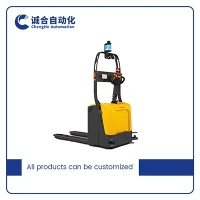
The Automated Guided Vehicle (AGV) Control System plays a vital role in modern logistics operations. AGVs are used to transport materials within a warehouse or manufacturing facility in an automated and efficient manner. Our Smart Logistics System can be integrated with an AGV Control System to optimize the movement of goods.
When integrated, the Smart Logistics System can communicate real - time information about inventory levels, order priorities, and available storage locations to the AGV Control System. This allows the AGV Control System to make more informed decisions about which tasks to assign to the AGVs. For example, if a particular order needs to be fulfilled urgently, the Smart Logistics System can send this information to the AGV Control System, which will then prioritize the transportation of the relevant goods by the AGVs.
Moreover, the integration can also enable better resource management. The Smart Logistics System can analyze the overall traffic flow in the facility and provide suggestions to the AGV Control System on how to avoid congestion. This reduces the time that AGVs spend waiting in queues, thereby increasing the throughput of the entire logistics operation.
Integration with IO Integrated System
The IO Integrated System is responsible for managing the input and output of data and materials in a business. Integrating our Smart Logistics System with the IO Integrated System can enhance the accuracy and speed of data transfer between different parts of the supply chain.
In a traditional logistics setup, there can be delays and errors in data entry and transfer, which can lead to inefficiencies and costly mistakes. By integrating with the IO Integrated System, our Smart Logistics System can directly access and update data related to incoming and outgoing shipments. For instance, when a shipment arrives at the warehouse, the Smart Logistics System can immediately receive information from the IO Integrated System about the contents of the shipment, its source, and the expected storage location. This information can then be used to quickly allocate resources for unloading and storage.
On the output side, when an order is ready to be shipped, the Smart Logistics System can communicate with the IO Integrated System to generate accurate shipping documents and labels. This reduces the chances of shipping errors, such as incorrect addresses or missing items, and improves customer satisfaction.
Integration with Manufacturing Execution System
The Manufacturing Execution System (MES) is a key component in manufacturing operations. It manages and monitors the production process from start to finish. Integrating our Smart Logistics System with the MES can create a more synchronized and efficient production - logistics ecosystem.
When a production order is generated in the MES, the Smart Logistics System can be notified in real - time. It can then start preparing the necessary raw materials and components for transportation to the production line. This ensures that the production process is not delayed due to a lack of materials.


During the production process, the Smart Logistics System can also receive feedback from the MES about the progress of the production. If there are any changes in the production schedule, such as a delay or an acceleration, the Smart Logistics System can adjust its operations accordingly. For example, if a particular product is being produced faster than expected, the Smart Logistics System can start making arrangements for the storage or shipping of the finished goods earlier.
Benefits of Integration
Operational Efficiency
One of the most significant benefits of integrating a Smart Logistics System with other business systems is increased operational efficiency. By sharing data and coordinating operations, different systems can work together more smoothly. There is less duplication of effort, and tasks can be completed more quickly. For example, in the integration with the AGV Control System, the use of real - time data can reduce the idle time of AGVs and optimize their routes, leading to a more efficient material handling process.
Cost Savings
Integration can also lead to cost savings. By improving operational efficiency, companies can reduce labor costs, energy consumption, and inventory holding costs. For instance, better coordination between the Smart Logistics System and the MES can prevent over - production and reduce the amount of excess inventory. In addition, the integration with the IO Integrated System can reduce the cost associated with data entry errors and shipping mistakes.
Improved Customer Service
Another important benefit is improved customer service. With a more integrated and efficient logistics system, companies can fulfill orders faster and more accurately. Customers will receive their products in a timely manner, and the chances of receiving damaged or incorrect items will be greatly reduced. This leads to higher customer satisfaction and loyalty, which are essential for the long - term success of any business.
Challenges of Integration
While the benefits of integration are numerous, there are also some challenges that need to be addressed. One of the main challenges is the difference in data formats and communication protocols between different systems. Our Smart Logistics System needs to be able to understand and communicate with other systems effectively. This may require the development of custom interfaces or the use of middleware to translate data between different formats.
Another challenge is the issue of system security. When different systems are integrated, the risk of a security breach increases. It is necessary to implement robust security measures to protect the data and ensure the integrity of the entire integrated system. This includes measures such as data encryption, access control, and regular security audits.
Conclusion
In conclusion, the integration of a Smart Logistics System with other business systems such as the AGV Control System, IO Integrated System, and Manufacturing Execution System offers significant benefits in terms of operational efficiency, cost savings, and improved customer service. However, it also comes with challenges that need to be carefully managed.
As a Smart Logistics System provider, we are committed to helping our customers overcome these challenges and achieve seamless integration. Our team of experts has extensive experience in developing and implementing integrated solutions that are tailored to the specific needs of each business.
If you are interested in learning more about how our Smart Logistics System can integrate with your existing business systems and bring value to your operations, we invite you to contact us for a procurement consultation. We look forward to the opportunity to work with you to optimize your logistics and business processes.
References
- Chen, H., & Lee, C. (2019). Integration of logistics and manufacturing systems for smart factories. International Journal of Production Research, 57(13), 4079 - 4095.
- Huang, G. Q., Mak, K. L., & Chan, F. T. S. (2017). Smart manufacturing: Past research, present findings, and future directions. International Journal of Production Research, 55(3), 668 - 686.
- Lee, J., Bagheri, B., & Kao, H. A. (2015). A cyber - physical systems architecture for industry 4.0 - based manufacturing systems. Manufacturing Letters, 3, 18 - 23.