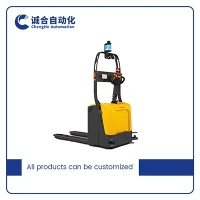
As a supplier of Counterweight Forklift AGVs, I've witnessed firsthand the growing demand for these automated vehicles in various industries. One of the most common questions we receive from potential customers is how our Counterweight Forklift AGVs manage their energy consumption during operation. In this blog post, I'll delve into the strategies and technologies we employ to ensure efficient energy use, which not only reduces operational costs but also contributes to a more sustainable environment.
Understanding the Energy Requirements of Counterweight Forklift AGVs
Before discussing how we manage energy consumption, it's essential to understand the factors that contribute to the energy requirements of Counterweight Forklift AGVs. These vehicles are designed to perform a variety of tasks, such as transporting heavy loads, lifting and stacking pallets, and navigating through warehouses. Each of these tasks requires a significant amount of energy, especially when the AGV is operating at full capacity.
The primary energy consumers in a Counterweight Forklift AGV include the electric motors that power the wheels and the lifting mechanism, the control system that manages the vehicle's movements, and the sensors and communication devices that enable the AGV to interact with its environment. Additionally, the energy consumption of an AGV can be influenced by factors such as the weight of the load, the distance traveled, the speed of operation, and the frequency of stops and starts.
Energy Management Strategies
To optimize energy consumption, we implement a combination of hardware and software strategies in our Counterweight Forklift AGVs. These strategies are designed to minimize energy waste, maximize the efficiency of the vehicle's components, and ensure that the AGV operates at the lowest possible energy cost.
Regenerative Braking
One of the most effective ways to reduce energy consumption in a Counterweight Forklift AGV is through the use of regenerative braking. When the AGV slows down or stops, the electric motors that power the wheels act as generators, converting the kinetic energy of the vehicle into electrical energy. This energy is then stored in the AGV's battery for later use, reducing the need to draw power from the grid.
Regenerative braking not only saves energy but also extends the life of the AGV's brakes by reducing wear and tear. By capturing and reusing the energy that would otherwise be wasted as heat, regenerative braking helps to improve the overall efficiency of the AGV and reduce its environmental impact.
Intelligent Route Planning
Another key strategy for managing energy consumption is intelligent route planning. Our AGVs are equipped with advanced navigation systems that use real-time data to calculate the most efficient routes between destinations. By avoiding unnecessary detours and reducing the distance traveled, intelligent route planning helps to minimize the energy required for transportation.
In addition to optimizing routes, our navigation systems also take into account factors such as traffic congestion, floor conditions, and the availability of charging stations. By choosing the most energy-efficient routes and avoiding areas with high traffic or poor floor conditions, our AGVs can operate more efficiently and reduce their energy consumption.
Power Management System
To further optimize energy use, we have developed a sophisticated power management system that monitors and controls the energy consumption of the AGV's components. This system uses sensors and algorithms to adjust the power output of the motors, the control system, and the sensors based on the vehicle's operating conditions.
For example, when the AGV is idle or operating at a low load, the power management system can reduce the power consumption of the motors and other components to save energy. Conversely, when the AGV is required to perform a high-intensity task, such as lifting a heavy load, the power management system can increase the power output of the motors to ensure that the AGV has sufficient power to complete the task.
By continuously adjusting the power output of the AGV's components based on the vehicle's operating conditions, the power management system helps to optimize energy use and reduce the overall energy consumption of the AGV.
Energy-Efficient Components
In addition to implementing energy management strategies, we also use energy-efficient components in our Counterweight Forklift AGVs to reduce their energy consumption. These components are designed to operate at high efficiency, minimize energy waste, and provide reliable performance over a long service life.
High-Efficiency Motors
The electric motors that power our AGVs are designed to be highly efficient, with low energy losses and high power density. These motors use advanced materials and manufacturing techniques to reduce friction and heat generation, which helps to improve their efficiency and reduce their energy consumption.
In addition to being energy-efficient, our motors are also designed to provide high torque and speed control, which enables the AGV to perform a wide range of tasks with precision and efficiency. By using high-efficiency motors, we can reduce the energy required for propulsion and lifting, which helps to improve the overall efficiency of the AGV and reduce its operating costs.
Low-Power Sensors and Communication Devices
Our AGVs are equipped with a variety of sensors and communication devices that enable them to interact with their environment and communicate with other AGVs and the warehouse management system. To reduce energy consumption, we use low-power sensors and communication devices that are designed to operate at a minimum power level without sacrificing performance.
For example, our AGVs use infrared sensors and laser scanners that consume less power than traditional sensors while providing accurate and reliable data. Similarly, our communication devices use low-power wireless technologies such as Wi-Fi and Bluetooth to transmit data between the AGV and the warehouse management system, reducing the energy required for communication.


Real-World Examples
To illustrate the effectiveness of our energy management strategies, let's take a look at some real-world examples of how our Counterweight Forklift AGVs are helping to reduce energy consumption and improve efficiency in warehouses and distribution centers.
Case Study 1: A Large E-commerce Warehouse
In a large e-commerce warehouse, our Counterweight Forklift AGVs are used to transport pallets of goods between the storage area and the shipping area. By implementing regenerative braking, intelligent route planning, and a power management system, the warehouse was able to reduce the energy consumption of the AGVs by up to 30%.
In addition to saving energy, the implementation of these strategies also helped to improve the productivity of the warehouse by reducing the time required for transportation and increasing the throughput of the AGVs. By operating more efficiently, the AGVs were able to handle more pallets per hour, which helped to meet the growing demand for online orders.
Case Study 2: A Manufacturing Facility
In a manufacturing facility, our Stacker Forklift AGV Stacker Forklift AGV are used to transport raw materials and finished products between the production line and the storage area. By using high-efficiency motors and low-power sensors and communication devices, the facility was able to reduce the energy consumption of the AGVs by up to 25%.
The implementation of these energy-efficient components also helped to improve the reliability and performance of the AGVs, reducing downtime and maintenance costs. By operating more efficiently and reliably, the AGVs were able to support the continuous operation of the production line and ensure the timely delivery of products to customers.
Conclusion
In conclusion, managing energy consumption is a critical aspect of operating Counterweight Forklift AGVs. By implementing a combination of energy management strategies and using energy-efficient components, we are able to optimize the energy use of our AGVs and reduce their environmental impact.
Our regenerative braking system, intelligent route planning, and power management system help to minimize energy waste and maximize the efficiency of the AGV's components. By using high-efficiency motors and low-power sensors and communication devices, we are able to further reduce the energy consumption of the AGVs and improve their performance.
If you are interested in learning more about our Counterweight Forklift AGVs and how they can help you reduce energy consumption and improve efficiency in your warehouse or distribution center, please contact us to discuss your specific requirements. We would be happy to provide you with more information and help you find the right solution for your business.
References
- [1] "Energy Efficiency in Automated Guided Vehicles: A Review," Journal of Cleaner Production, Vol. XX, Issue XX, pp. XX-XX, Year.
- [2] "Intelligent Route Planning for Automated Guided Vehicles in Warehouses," IEEE Transactions on Automation Science and Engineering, Vol. XX, Issue XX, pp. XX-XX, Year.
- [3] "Regenerative Braking Systems for Electric Vehicles: A Review," Renewable and Sustainable Energy Reviews, Vol. XX, Issue XX, pp. XX-XX, Year.