Hey there! As a supplier of Backpack Lifting AGVs, I've been getting a bunch of questions lately about how our nifty machines perform in high - altitude areas. So, I thought I'd sit down and write this blog to share what I know.
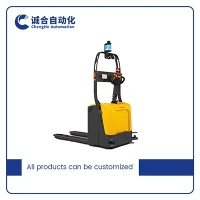
First off, let's talk about what a Backpack Lifting AGV is. For those who aren't in the know, it's an Automated Guided Vehicle (AGV) that can lift loads on its back, kind of like a backpack. These things are super handy in warehouses, factories, and all sorts of industrial settings. They can move heavy stuff around efficiently, saving a ton of time and manpower.
Now, high - altitude areas come with their own set of challenges. The air is thinner up there, which can affect a few key aspects of our Backpack Lifting AGVs. One of the main things is the battery performance. Batteries rely on chemical reactions to work, and the thinner air can impact these reactions. In high - altitude areas, the lower air pressure means there's less oxygen available. Some battery chemistries, like those in lithium - ion batteries, can be a bit finicky about the oxygen levels. They might not charge as efficiently or discharge as well as they do at lower altitudes.
But don't worry! We've done a lot of research and development to make sure our Backpack Lifting AGVs can handle these conditions. Our engineers have optimized the battery management systems to account for the changes in air pressure. We've also tested different battery chemistries to find the ones that are most resilient in high - altitude environments.
Another thing that can be affected by high altitude is the motor performance. The motors in our AGVs need to work hard to lift and move heavy loads. The thinner air means there's less cooling capacity. Motors generate heat when they're running, and they need to dissipate this heat to avoid overheating. At high altitudes, the reduced air density makes it harder for the motors to cool down.
To tackle this issue, we've designed our AGVs with enhanced cooling systems. We use high - efficiency fans and heat sinks to make sure the motors stay at a safe operating temperature. These cooling systems are specifically calibrated to work well in low - air - pressure conditions.
The sensors on our Backpack Lifting AGVs are also crucial for their operation. They help the AGV navigate around obstacles, follow paths, and interact with other equipment. High - altitude areas can sometimes have different electromagnetic conditions. For example, there might be more cosmic radiation at higher elevations. This radiation can interfere with the sensors, causing them to give inaccurate readings.
We've taken steps to shield our sensors from this radiation. We use special materials and shielding techniques to protect the sensitive electronic components in the sensors. This way, our AGVs can still operate accurately in high - altitude areas.
Now, let's talk about the different types of Backpack Lifting AGVs we offer. We have the Heavy Duty Automatic Transfer Cart. This one is great for moving large and heavy loads over longer distances. It's built tough and can handle the challenges of high - altitude areas with ease.
Our Heavy load Automated Guided Vehicle is another beast. It can lift up to 20 tons of weight! That's a whole lot of stuff. Whether you're in a high - altitude mining operation or a large - scale manufacturing plant, this AGV can get the job done.
And then there's the Ultra - long Automated Guided Cart. As the name suggests, it's extra long, which makes it perfect for transporting long and awkwardly - shaped loads. It's designed to be stable and maneuverable, even in the challenging conditions of high - altitude areas.
In terms of real - world performance, we've had some great feedback from customers who've used our Backpack Lifting AGVs in high - altitude regions. One customer in a mountainous mining area told us that our AGVs were able to keep up with the demanding workload. They were impressed with how well the AGVs handled the thin air and the rough terrain.
Another customer in a high - altitude manufacturing facility said that the enhanced cooling systems on our AGVs really made a difference. They didn't have any issues with overheating, even during long - hours of operation.


So, if you're thinking about using Backpack Lifting AGVs in a high - altitude area, you can trust that our products are up to the task. We've put in the time and effort to make sure they perform well in these challenging environments.
If you're interested in learning more about our Backpack Lifting AGVs or have any questions about their performance in high - altitude areas, don't hesitate to reach out. We're always happy to have a chat and help you find the right solution for your business. Whether you're a small - scale operation or a large industrial giant, we've got an AGV that can meet your needs.
Let's work together to make your operations more efficient and productive. Contact us today to start the conversation about purchasing our Backpack Lifting AGVs and see how they can transform your business.
References
- Research on Battery Performance in High - Altitude Environments
- Studies on Motor Cooling in Low - Air - Pressure Conditions
- Sensor Shielding Techniques for High - Altitude Applications