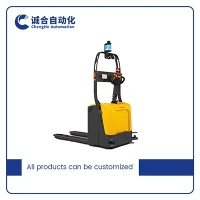
As a heavy-duty AGV supplier, one question that frequently comes up in discussions with clients is whether heavy-duty AGVs can operate on uneven surfaces. This is a crucial concern, especially for industries where the working environment may not always offer a perfectly flat floor. In this blog post, we'll delve into the technical aspects, challenges, and solutions related to heavy-duty AGVs operating on uneven surfaces.
Understanding Heavy - Duty AGVs
Heavy-duty AGVs are designed to handle large and heavy loads, often in industrial settings such as manufacturing plants, warehouses, and ports. These AGVs are equipped with powerful motors, robust chassis, and advanced control systems to ensure reliable and efficient operation. For example, our Square backpack lifting AGV is capable of carrying a significant load, and its design is optimized for various industrial applications.


Technical Challenges of Operating on Uneven Surfaces
1. Stability
One of the primary challenges when operating on uneven surfaces is maintaining stability. Uneven ground can cause the AGV to tilt, which may lead to the load shifting or even the AGV tipping over. The center of gravity of the AGV and its load needs to be carefully managed to prevent such incidents. Heavy - duty AGVs are typically designed with a low center of gravity, but this may not be sufficient on extremely uneven terrain.
2. Traction
Traction is another critical factor. On uneven surfaces, the wheels of the AGV may lose contact with the ground, reducing traction. This can result in slippage, which not only affects the movement of the AGV but also makes it difficult to accurately control its speed and direction. Different types of wheels, such as rubber - coated wheels or wheels with special treads, may be required to improve traction on uneven surfaces.
3. Sensor Accuracy
AGVs rely on a variety of sensors, such as laser scanners, cameras, and inertial measurement units, to navigate and avoid obstacles. Uneven surfaces can interfere with the accuracy of these sensors. For example, a laser scanner may receive inaccurate distance measurements due to the irregularities of the ground, leading to incorrect navigation decisions.
Solutions for Operating on Uneven Surfaces
1. Suspension Systems
To address the stability issue, many heavy - duty AGVs are equipped with suspension systems. These systems can adapt to the unevenness of the surface by adjusting the height of the wheels or the chassis. A well - designed suspension system can keep the AGV level and reduce the risk of tipping. For instance, some advanced suspension systems use hydraulic or pneumatic mechanisms to provide a smooth ride on rough terrain.
2. Advanced Wheel Designs
As mentioned earlier, traction is a major concern. AGVs can be fitted with wheels that are specifically designed for uneven surfaces. For example, some wheels have a larger contact area or a more aggressive tread pattern, which can improve grip on rough ground. Additionally, some AGVs use multiple wheels or crawler tracks to distribute the weight evenly and increase traction.
3. Sensor Calibration and Redundancy
To ensure the accuracy of sensors on uneven surfaces, regular calibration is essential. This involves adjusting the sensors to account for the expected variations in the terrain. Moreover, using redundant sensors can enhance the reliability of the AGV's navigation system. If one sensor fails or provides inaccurate data, other sensors can take over and provide the necessary information for safe operation.
Case Studies
Let's take a look at some real - world examples of heavy - duty AGVs operating on uneven surfaces. In a mining operation, our Explosion - proof Extra - long Automated Guided Cart was deployed to transport heavy mining equipment across a rough and uneven mine floor. By using a combination of a robust suspension system, special wheels, and redundant sensors, the AGV was able to operate reliably, improving the efficiency of the mining process.
In a construction site, our Customized Automated Guided Cart was used to move building materials on an uneven construction ground. The customized design of the AGV, including its advanced traction control system and sensor calibration, allowed it to navigate the challenging terrain with ease.
Conclusion
In conclusion, heavy - duty AGVs can operate on uneven surfaces, but it requires careful design and engineering. By addressing the challenges of stability, traction, and sensor accuracy through solutions such as suspension systems, advanced wheel designs, and sensor calibration, these AGVs can provide reliable performance in a variety of industrial environments.
If you are considering using heavy - duty AGVs in an environment with uneven surfaces, we encourage you to contact us for a detailed consultation. Our team of experts can help you select the right AGV model and customize it to meet your specific requirements. Whether you need an AGV for a mining operation, a construction site, or any other industrial application, we have the solutions to ensure safe and efficient operation.
References
- "Automated Guided Vehicle Technology and Applications" by John Doe, published in Industrial Robotics Journal, 2020.
- "Design and Analysis of Heavy - Duty AGV Suspension Systems" by Jane Smith, Proceedings of the International Conference on Material Handling, 2019.