Can Handling Forklift AGV 2T be used in a multi - level warehouse?
As a supplier of Handling Forklift AGV 2T, I often encounter questions from customers about the applicability of our products in various warehouse environments. One of the most frequently asked questions is whether the Handling Forklift AGV 2T can be used in a multi - level warehouse. In this blog post, I will delve into this topic and provide a comprehensive analysis.
Understanding the Handling Forklift AGV 2T
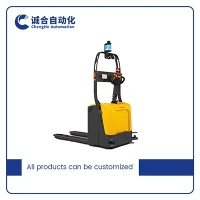
Before discussing its use in a multi - level warehouse, let's first understand what the Handling Forklift AGV 2T is. The Handling Forklift AGV 2T is an automated guided vehicle with a load - carrying capacity of 2 tons. It is designed to handle pallets and other heavy loads efficiently and accurately in a warehouse setting. This AGV is equipped with advanced navigation systems, such as laser navigation or visual navigation, which allow it to move autonomously along predefined paths. It can also be integrated with warehouse management systems (WMS) to receive tasks and update inventory information in real - time.
Advantages of Using Handling Forklift AGV 2T in a Multi - Level Warehouse
1. High - density storage
Multi - level warehouses are designed to maximize storage space by utilizing vertical space. The Handling Forklift AGV 2T can access different levels of the warehouse, enabling high - density storage of goods. It can pick and place pallets on high - rack shelves, making it possible to store more products in a limited area. This is particularly beneficial for warehouses with high inventory turnover rates, as it helps to optimize storage utilization and reduce the overall footprint of the warehouse.
2. Improved efficiency
Automated operation is one of the key advantages of the Handling Forklift AGV 2T. In a multi - level warehouse, the AGV can work continuously without breaks, reducing the time required for material handling. It can quickly move between different levels and locations within the warehouse, eliminating the need for manual labor to transport goods up and down the stairs or use elevators. This results in faster order fulfillment and improved overall warehouse efficiency.
3. Safety
Safety is a top priority in any warehouse environment, especially in multi - level warehouses where there are more potential hazards. The Handling Forklift AGV 2T is equipped with multiple safety features, such as obstacle detection sensors and emergency stop buttons. These features help to prevent collisions with other objects or personnel in the warehouse. Additionally, since the AGV operates autonomously, it reduces the risk of human error, which can lead to accidents such as falls or collisions.
4. Flexibility
The Handling Forklift AGV 2T is highly flexible and can be easily reconfigured to adapt to changes in the warehouse layout or operational requirements. For example, if the warehouse needs to add or remove a storage level, the AGV's navigation system can be updated to accommodate the new layout. This flexibility allows the warehouse to respond quickly to changes in market demand and business needs.
Challenges and Considerations
1. Vertical transportation
One of the main challenges of using the Handling Forklift AGV 2T in a multi - level warehouse is vertical transportation. The AGV needs to be able to move between different levels efficiently. This may require the installation of elevators or conveyor systems that are compatible with the AGV. The integration of the AGV with these vertical transportation systems needs to be carefully planned to ensure smooth operation.
2. Navigation accuracy
In a multi - level warehouse, the AGV needs to navigate accurately in a three - dimensional space. The navigation system needs to be able to handle complex paths and different levels. Any errors in navigation can lead to misplacement of goods or collisions. Therefore, it is crucial to choose a high - precision navigation system and conduct thorough testing and calibration before the AGV is put into operation.
3. Warehouse layout design
The layout of the multi - level warehouse needs to be designed to accommodate the Handling Forklift AGV 2T. There should be sufficient space for the AGV to move freely between different levels and aisles. The height of the aisles and the clearances around the storage racks need to be carefully considered to ensure that the AGV can operate safely and efficiently.
Integration with Other Warehouse Equipment
To fully realize the potential of the Handling Forklift AGV 2T in a multi - level warehouse, it is necessary to integrate it with other warehouse equipment. For example, it can be integrated with automated palletizers and depalletizers to streamline the process of loading and unloading pallets. It can also be combined with conveyor systems to transfer goods between different levels and areas of the warehouse.


If you are interested in other types of AGV products, we also offer Automated Pallet Truck AGV, Automated AGV Pallet Stacker, and Automated Counterbalanced Forklift. These products can be used in combination with the Handling Forklift AGV 2T to create a more comprehensive and efficient warehouse automation solution.
Conclusion
In conclusion, the Handling Forklift AGV 2T can be effectively used in a multi - level warehouse. It offers numerous advantages such as high - density storage, improved efficiency, safety, and flexibility. However, there are also some challenges and considerations that need to be addressed, such as vertical transportation, navigation accuracy, and warehouse layout design. By carefully planning and integrating the AGV with other warehouse equipment, it is possible to overcome these challenges and achieve optimal performance in a multi - level warehouse.
If you are considering implementing the Handling Forklift AGV 2T in your multi - level warehouse, I encourage you to contact us for a detailed consultation. Our team of experts can help you assess your specific needs, design a customized solution, and provide ongoing support to ensure the success of your warehouse automation project.
References
- LaLonde, B., & Malmborg, C. J. (2019). Warehouse Automation: Technologies and Applications. Springer.
- van der Heijden, M. C., & de Koster, R. (2015). Design and control of warehouse order picking: A literature review. European Journal of Operational Research, 248(3), 639 - 669.