Hey there! As a supplier of collaborative robots, I often get asked about the potential applications of these nifty machines. One question that's been popping up more frequently lately is, "Can collaborative robots be used in 3D printing?" Well, you bet they can! In this blog post, I'm gonna dive into how these two technologies can work hand in hand to revolutionize the manufacturing world.
First off, let's talk a bit about what collaborative robots, or cobots, are. These are robots designed to work alongside humans in a shared workspace. Unlike traditional industrial robots that are often fenced off for safety reasons, cobots are equipped with sensors and safety features that allow them to interact with humans safely. They're flexible, easy to program, and can be quickly redeployed for different tasks.
Now, let's look at 3D printing. It's an amazing technology that allows you to create three - dimensional objects from a digital model by adding material layer by layer. It's used in a wide range of industries, from aerospace to healthcare, for prototyping, custom manufacturing, and even end - use part production.
So, how can cobots fit into the 3D printing process?
Material Handling
One of the most obvious applications is material handling. 3D printers often require different types of materials, such as filaments, powders, or resins. Cobots can be programmed to pick up these materials from storage areas and load them into the 3D printer. For example, if you're using a filament - based 3D printer, a cobot can take a spool of filament and feed it into the printer's extruder. This not only saves time but also reduces the risk of human error.
Moreover, cobots can handle the removal of finished parts from the 3D printer. Once a print job is complete, the cobot can carefully pick up the part, place it on a conveyor belt or a storage tray, and even perform some basic post - processing tasks like removing support structures. This automation of the material handling process can significantly increase the efficiency of 3D printing operations.
Quality Control
Quality control is a crucial aspect of 3D printing. Cobots can be equipped with cameras and sensors to inspect the printed parts for defects. They can measure dimensions, check for surface irregularities, and ensure that the part meets the required specifications. If a defect is detected, the cobot can mark the part for further inspection or even discard it if necessary. This real - time quality control helps to reduce waste and improve the overall quality of the printed parts.


Process Monitoring
Cobots can also play a role in monitoring the 3D printing process itself. They can be programmed to keep an eye on parameters such as temperature, humidity, and print speed. If any of these parameters go out of the optimal range, the cobot can alert the operator or even make adjustments to the printer settings. This continuous monitoring helps to ensure a consistent and reliable 3D printing process.
Post - Processing
After a part is printed, it often requires some post - processing steps, such as sanding, polishing, or painting. Cobots can be used to perform these tasks with high precision. They can hold the part in place while a sanding tool is used to smooth the surface, or they can apply a thin layer of paint evenly across the part. This not only speeds up the post - processing time but also ensures a more consistent finish.
Integration with Other Technologies
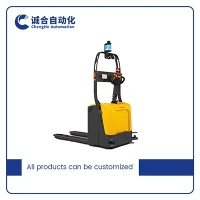
Collaborative robots can be integrated with other technologies to enhance the 3D printing process. For example, they can be used in conjunction with AGV Multi - Vehicle Coordination. Automated Guided Vehicles (AGVs) can transport materials and finished parts between different stations in the manufacturing facility. The cobot can load and unload the AGVs, creating a seamless and efficient workflow.
Another interesting integration is with Customized AGV Forklift. These specialized AGVs can handle heavy loads and are ideal for moving large 3D printed parts or large quantities of printing materials. The cobot can work with the AGV forklift to ensure that the materials are properly loaded and unloaded.
In some industries, such as the ammunition industry, Customized Explosion - proof Backpack AGV for Ammunition Transportation can be used in combination with cobots. The cobot can handle the delicate task of loading and unloading ammunition - related 3D printed parts onto the explosion - proof AGV, ensuring safety and efficiency.
Advantages of Using Cobots in 3D Printing
- Increased Productivity: By automating repetitive tasks like material handling and post - processing, cobots can significantly increase the output of 3D printing operations. They can work 24/7 without getting tired, which means more parts can be printed in a shorter period of time.
- Improved Safety: Cobots are designed with safety in mind. They can reduce the risk of accidents associated with manual material handling and post - processing tasks. For example, they can handle hot parts or sharp tools without putting human operators at risk.
- Enhanced Flexibility: Cobots are easy to program and reprogram. This means that they can be quickly adapted to different 3D printing tasks and materials. If you need to switch from printing small prototypes to large end - use parts, the cobot can be reconfigured accordingly.
- Cost - Effectiveness: While the initial investment in a cobot may seem high, in the long run, it can save a lot of money. By reducing labor costs, minimizing waste, and improving quality, cobots can provide a good return on investment.
Challenges and Considerations
Of course, there are also some challenges and considerations when using cobots in 3D printing.
- Programming Skills: Programming a cobot requires some technical skills. However, many modern cobots come with user - friendly programming interfaces that make it easier for non - experts to program them. There are also training courses available to help operators learn how to program cobots effectively.
- Compatibility: The cobot needs to be compatible with the 3D printer and other equipment in the manufacturing environment. This may require some customization and integration work to ensure that everything works together smoothly.
- Safety Standards: Although cobots are designed to be safe, it's important to follow all safety standards and regulations when using them in a 3D printing facility. This includes proper training for operators, regular maintenance of the cobot, and the use of appropriate safety equipment.
Conclusion
In conclusion, collaborative robots have great potential in the 3D printing industry. They can improve productivity, safety, flexibility, and cost - effectiveness. Whether it's material handling, quality control, process monitoring, or post - processing, cobots can play a vital role in enhancing the 3D printing process. By integrating cobots with other technologies like AGVs, the possibilities for automation in 3D printing are endless.
If you're in the 3D printing business and are looking to take your operations to the next level, I encourage you to consider using collaborative robots. They can be a game - changer for your manufacturing facility. If you're interested in learning more about how our collaborative robots can be integrated into your 3D printing process, feel free to reach out to us for a procurement discussion. We'd be happy to help you find the best solution for your needs.
References
- "Automation in Additive Manufacturing: Trends and Opportunities," Industry Week, 2023
- "Collaborative Robots in the Manufacturing Industry," Robotics Today, 2022
- "3D Printing: A Guide to the Technology and Its Applications," 3D Printing World, 2021