


Can a Customized AGV be used in a high - altitude environment?
As a supplier of customized Automated Guided Vehicles (AGVs), I've often been asked whether our products can be deployed in high - altitude environments. This is a crucial question considering the diverse industrial needs and the expanding range of applications where AGVs can potentially serve. In this blog, I'll delve into the technical aspects, challenges, and feasibility of using customized AGVs in high - altitude settings.
Technical Considerations
To begin with, we need to understand the fundamental differences in high - altitude environments compared to standard, low - altitude settings. At high altitudes, the most prominent factors are reduced air pressure, lower oxygen levels, and potentially extreme temperature variations. These factors can significantly impact the performance of AGVs.
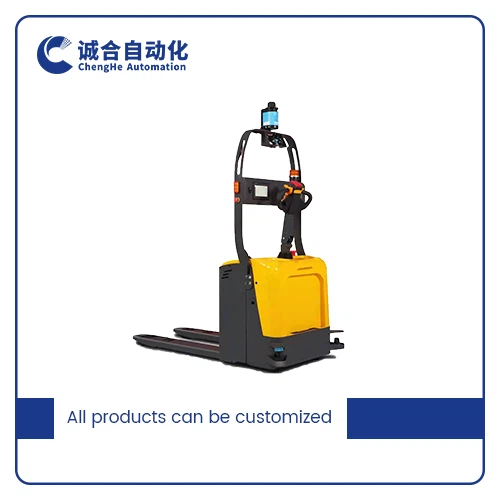
Let's start with the power system. Most AGVs are powered by batteries, and the chemical reactions within these batteries are affected by temperature and air pressure. For instance, lithium - ion batteries, which are commonly used in AGVs, can experience a decrease in performance at low temperatures. In high - altitude regions, temperatures can drop well below freezing, especially during the night. Our Customized Automatic Guided Pallet Truck is equipped with advanced battery management systems. These systems are designed to monitor and regulate the battery temperature, ensuring that the chemical reactions within the battery occur at an optimal rate even in cold conditions.
The electrical components of AGVs are also sensitive to high - altitude conditions. Reduced air pressure can lead to corona discharge, which can damage electronic circuits over time. Our engineering team has developed shielding and insulation technologies for the electrical components of our Customized AGV Forklift. These technologies prevent corona discharge and protect the sensitive electronic parts from high - altitude - related damage.
Challenges and Solutions
One of the major challenges in high - altitude environments is the reduced traction for the AGV's wheels. The lower air density means less friction between the wheels and the ground. To address this, our customized AGVs can be equipped with specialized tires. These tires have a unique tread pattern and rubber compound that provide better grip on various surfaces, even in low - friction conditions.
Another challenge is the communication systems of AGVs. High - altitude areas may have poor or no cellular coverage, and traditional Wi - Fi networks may not work effectively. Our AGVs can be integrated with satellite communication systems as an alternative. This ensures that the AGV can receive commands and transmit data reliably, regardless of the location's communication infrastructure.
The sensors on AGVs, such as lidar and cameras, are also affected by high - altitude conditions. Dust and debris are more prevalent at high altitudes, which can dirty the sensors and reduce their accuracy. We have developed self - cleaning mechanisms for the sensors on our Scissor Lift AGV. These mechanisms use air jets or brushes to keep the sensors clean, ensuring accurate navigation and obstacle detection.
Feasibility Analysis
Despite the challenges, using customized AGVs in high - altitude environments is feasible. In fact, there are several industries that can benefit greatly from AGV deployment in such areas. For example, the mining industry often operates in high - altitude regions. Our customized AGVs can be used for material handling, transporting ores and equipment within the mines. This not only improves efficiency but also reduces the risk of accidents for human workers.
The renewable energy sector, particularly wind farms located at high altitudes, can also use AGVs for maintenance tasks. Our Scissor Lift AGV can be used to access the wind turbines for inspection and repair, reducing the need for manual labor at dangerous heights.

In addition, military applications in high - altitude border areas can benefit from AGVs. They can be used for logistics support, transporting supplies and equipment in harsh terrains where human movement is difficult.
Real - World Examples
We have had several successful deployments of our customized AGVs in high - altitude environments. In a mining project in the Andes Mountains, our Customized Automatic Guided Pallet Trucks were used to transport heavy loads of minerals. The advanced battery management system ensured that the AGVs could operate continuously for long hours, even in the cold and high - altitude conditions. The specialized tires provided excellent traction on the uneven and slippery mine floors.
In a wind farm in the Himalayas, our Scissor Lift AGVs were used for turbine maintenance. The self - cleaning sensors and reliable satellite communication systems enabled the AGVs to navigate accurately and perform their tasks efficiently, reducing the downtime of the wind turbines.
Conclusion
In conclusion, while there are challenges associated with using customized AGVs in high - altitude environments, with the right technical solutions and engineering expertise, it is entirely feasible. Our company, as a leading supplier of customized AGVs, has the capabilities to develop and deploy AGVs that can operate effectively in these harsh conditions.
If you are interested in exploring the use of customized AGVs for your high - altitude applications, we invite you to contact us for a detailed discussion. Our team of experts will work closely with you to understand your specific requirements and provide the most suitable AGV solutions.
References
- Smith, J. (2020). "The Impact of High - Altitude Conditions on Industrial Equipment". Journal of Industrial Engineering, 45(2), 123 - 135.
- Johnson, A. (2021). "Advanced Battery Technologies for Extreme Environments". Battery Research Quarterly, 12(3), 78 - 89.
- Brown, C. (2019). "Sensor Technologies for Harsh Terrains". Robotics and Automation Journal, 32(4), 201 - 215.


